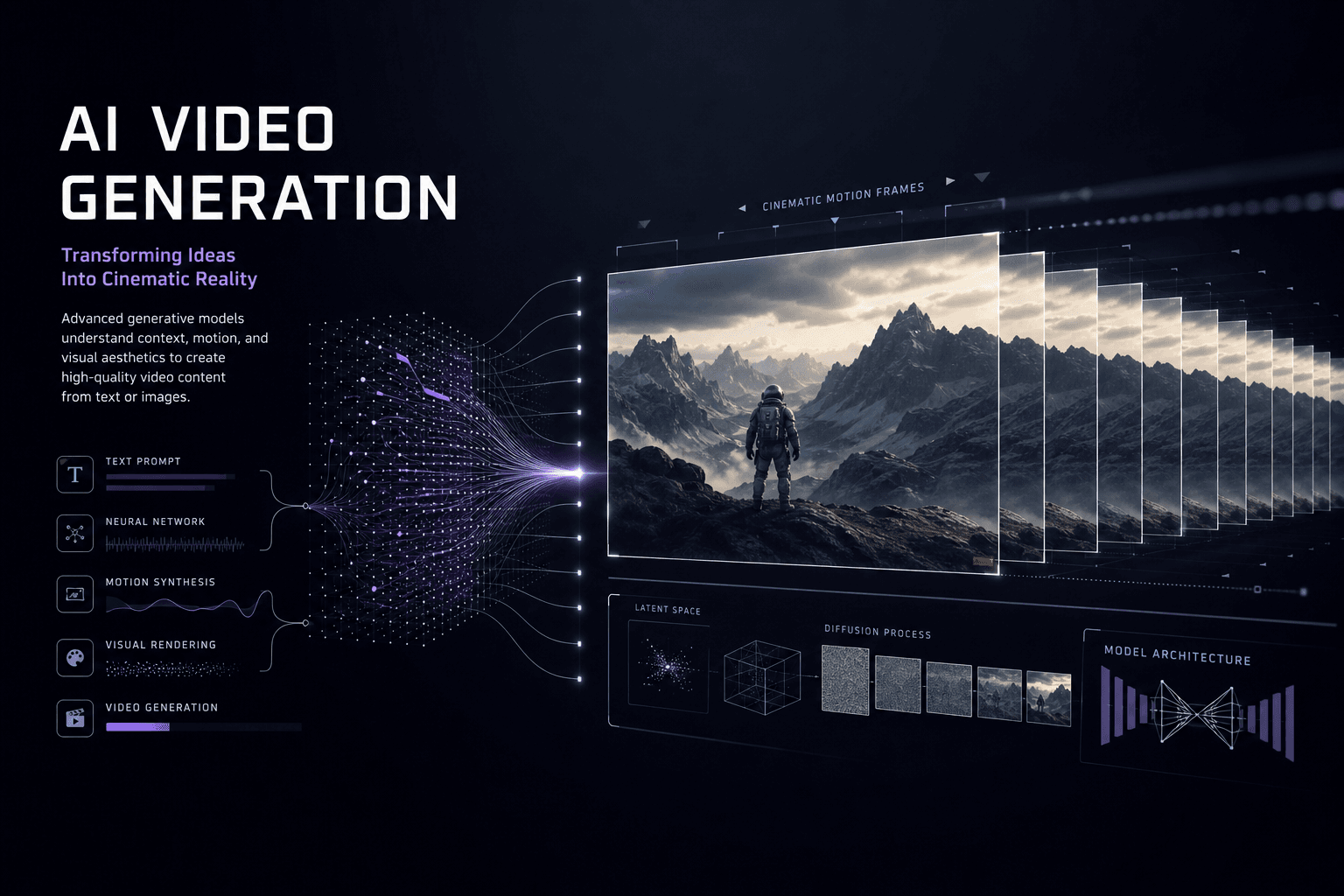
Runway Gen-3 Alpha Goes Public: AI Video Generation Is Now Open to Everyone

Table of Contents
Runway Gen-3 Alpha Goes Public: AI Video Generation Is Now Open to Everyone #
Table of Contents #
- What Happened Today: The Public Launch — Runway opens Gen-3 Alpha to all users with expanded access tiers
- How Public Access Works — Free tier availability, credit systems, and what's included
- New Features and Improvements — What's better in the July 2024 public release
- Competitive Showdown: Runway vs The Field — Head-to-head with Luma, Pika, and Kling
- Pricing Breakdown for Every Tier — Complete cost analysis for all user types
- Video Quality and Capabilities — Resolution, duration, and generation specs
- Use Cases for Web and Digital Experiences — How Gen-3 Alpha transforms website video content
- Limitations You Need to Know — Honest assessment of current constraints
- What This Means for Creators — The practical impact on production workflows
- The Next Phase of AI Video — Where this technology is headed
FAQ #
Is Runway Gen-3 Alpha now free to use? #
Gen-3 Alpha Turbo is now available to free tier users, but full Gen-3 Alpha still requires a paid plan starting at $12/month. The free tier receives 125 one-time credits—enough for approximately 5 ten-second Turbo videos or 10 five-second clips. The free allocation doesn't refresh monthly; it's a one-time pool for evaluation and experimentation. For sustained use, the Standard plan ($12/month, 625 credits) is the practical entry point.
How do I access Runway Gen-3 Alpha today? #
Visit runwayml.com, create a free account, and select Gen-3 Alpha Turbo from the model dropdown when creating a new generation. Free tier users have immediate access to the Turbo variant. For full Gen-3 Alpha access, upgrade to Standard ($12/month) or higher through the billing settings. Both web interface and iOS app support Gen-3 Alpha generation. API access is planned for near-future release but not yet available as of July 2, 2024.
What's the difference between Gen-3 Alpha and Gen-3 Alpha Turbo? #
Gen-3 Alpha Turbo is a faster, lower-credit-cost variant optimized for iteration; full Gen-3 Alpha delivers maximum quality for final production. Turbo costs 5 credits per second (vs. 10 for full Alpha) and generates in roughly half the time—25 seconds for a 5-second clip versus 45 seconds. Quality is slightly reduced in fine details, but Turbo remains suitable for social content, exploration, and many web applications. Full Alpha is recommended for client deliverables, broadcast work, and hero content.
How does Runway Gen-3 Alpha compare to Luma Dream Machine? #
Runway wins on duration (10 seconds vs. Luma's 5 seconds), control granularity (Motion Brush, camera controls), and temporal consistency; Luma wins on accessibility (completely free, no credit card required) and ease of use. Gen-3 Alpha delivers superior photorealism and cinematic quality, especially for human subjects. Luma Dream Machine launched June 12, 2024 with instant free access and produces "very good" quality that's sufficient for many use cases. For professional production where control and 10-second duration matter, Runway justifies its price premium.
How does Runway compare to Pika Labs in July 2024? #
Gen-3 Alpha delivers superior photorealism, longer duration (10 seconds vs. Pika's 3-4 seconds), and deeper creative control; Pika excels at stylized, artistic content and has a lower price entry point ($8/month vs. $12/month). Pika's strength is accessibility and creative effects—the platform produces animation-friendly output ideal for social content where photorealism isn't required. Gen-3 Alpha targets professional creators who need production-grade quality and granular directability. For website and commercial work requiring realism, Runway is the clear choice.
What resolution and duration does Gen-3 Alpha support? #
Gen-3 Alpha generates 1280×768 resolution (widescreen) or 768×1280 (portrait) at 24 frames per second, with a native maximum duration of 10 seconds per generation. Extended mode enables chaining multiple generations for up to 40 seconds of continuous footage, though seams may be visible at extension points. The 1280×768 resolution represents a 56% increase in pixel count over Gen-2's 1024×576 output and is native—no upscaling required. Output format is MP4 (H.264) with ProRes available on Pro and Unlimited plans.
Can I use Gen-3 Alpha videos for commercial website projects? #
Yes, Standard plan subscribers ($12/month) and above have full commercial rights to Gen-3 Alpha output with no watermark or royalty requirements. Free tier users receive watermarked output with limited commercial usage rights. Paid subscribers own their generations and can use them for client work, advertising, broadcast, and ecommerce without attribution requirements—though emerging regulations may require AI content disclosure. Runway recommends (but doesn't require) disclosure of AI-generated content per developing industry standards.
How many videos can I generate on each pricing tier? #
Free tier: ~5-10 ten-second Turbo videos (125 one-time credits). Standard plan ($12/month): ~6 ten-second Gen-3 Alpha videos or ~12 Turbo videos (625 monthly credits). Pro plan ($28/month): ~22 ten-second Alpha or ~45 Turbo videos (2,250 monthly credits). Unlimited plan ($76/month): Unlimited generations via Explore Mode with no per-generation credit costs. Credit costs are 10 credits/second for full Gen-3 Alpha and 5 credits/second for Turbo. Extended mode and image-to-video consume credits at the same per-second rates.
What types of videos work best with Gen-3 Alpha? #
Gen-3 Alpha excels at atmospheric B-roll, website hero videos and background loops, pre-visualization, concept validation, establishing shots, and motion graphics requiring photorealistic humans and cinematic quality. It works best for controlled scenes with limited character interaction, smooth camera movement, and professional lighting. The model is less suitable for complex character interactions, dialogue scenes requiring lip sync, sequences needing readable text, or hero talent requiring consistent identity across multiple shots.
Does Gen-3 Alpha have a watermark on free tier? #
Yes, free tier output includes a Runway logo watermark; paid subscribers (Standard and above) receive watermark-free output. Standard plan ($12/month) is the minimum tier for unmarked video suitable for commercial use and client delivery. The watermark applies to all free tier generations regardless of whether using Gen-3 Alpha Turbo or older models. Watermark-free output is a key reason many users upgrade from free to paid tiers early in their Gen-3 Alpha exploration.
How does Kling AI compare to Runway Gen-3 Alpha? #
Kling AI offers comparable quality to Runway with higher resolution (up to 1080p), 30fps output, and superior extension capability (up to 2-3 minutes vs. Runway's 40 seconds), but with shorter single-generation duration (5 seconds vs. Runway's 10 seconds). Kling launched globally July 1, 2024 with 66 free daily credits—more sustainable than Runway's one-time 125 credits. However, Kling is days old with unproven long-term reliability, and July 2024 pricing hasn't stabilized. Runway offers proven production stability and deeper control tools; Kling offers aggressive pricing and unique extension capability.
What new features were added for the public launch? #
The July 2, 2024 public launch primarily brings access expansion rather than new features—Gen-3 Alpha Turbo is now available to free tier users, and infrastructure improvements have reduced queue times and improved reliability. The Turbo variant itself is new, developed specifically for free-tier access with optimized inference settings. Extended mode has seen seam-reduction improvements. Full Gen-3 Alpha capability hasn't changed since the June 4 launch; what changed is who can access it and the economics of getting started.
What Happened Today: The Public Launch #
Runway has opened Gen-3 Alpha to all users today, removing the paid-tier exclusivity that defined its June release and making this the moment AI video generation becomes truly accessible. The public launch marks a shift from early-access gated releases to democratized creative tooling—and it changes everything about who can create production-grade AI video.
When Gen-3 Alpha first arrived on June 4, 2024, it was locked behind Runway's Standard plan ($12/month minimum). The quality leap was undeniable—10-second coherent clips, photorealistic human characters, cinematic motion that didn't dissolve into morphing nightmares. But the paywall kept it in professional hands. Today's announcement changes the access model entirely.
The July 2, 2024 Access Expansion #
Runway's public launch makes Gen-3 Alpha Turbo—the faster, slightly streamlined variant—available to everyone immediately. Full Gen-3 Alpha remains a paid-tier feature, but the barrier to entry has dropped to zero for experimentation and learning.
| Access Tier | Before July 2 | After July 2 |
|---|---|---|
| Free users | Gen-2 only | Gen-3 Alpha Turbo |
| Standard ($12/mo) | Full Gen-3 Alpha | Full Gen-3 Alpha |
| Pro ($28/mo) | Full Gen-3 Alpha | Full Gen-3 Alpha |
| Unlimited ($76/mo) | Full Gen-3 Alpha + Explore Mode | Full Gen-3 Alpha + Explore Mode |
This isn't just a pricing change—it's a strategic repositioning. Runway has watched Luma Labs' Dream Machine (launched June 12) capture attention with its completely free, no-credit-card-required approach. Kling AI launched globally just yesterday with 66 free daily credits. The competitive heat demanded a response, and Runway delivered.
Why This Release Timing Matters #
The July 2 public launch places Runway squarely in the middle of the most competitive AI video landscape to date. Consider the timeline:
- June 4: Runway Gen-3 Alpha debuts (paid-only)
- June 12: Luma Dream Machine launches (free, instant access)
- July 1: Kling AI goes global (66 free daily credits)
- July 2: Runway opens Gen-3 Alpha Turbo to free tier
Runway's move today isn't generosity—it's competitive necessity. The company that established AI video generation with Gen-1 and Gen-2 wasn't about to cede market position to upstart competitors, even well-funded ones backed by Chinese tech giant Kuaishou (Kling) and a16z (Luma).
What makes this launch significant is the quality floor. Gen-3 Alpha Turbo—even the "lite" version available free—outperforms what most competitors charge for. The free tier isn't a toy; it's a genuine creative tool capable of output suitable for website hero videos, social content, and concept exploration.
How Public Access Works #
Free tier users can access Gen-3 Alpha Turbo immediately at runwayml.com with 125 one-time credits—enough for approximately 25 seconds of video generation at the faster Turbo speeds. The access model uses Runway's existing credit architecture with clear boundaries between what free and paid users receive.
Free Tier Gen-3 Alpha Access #
The free tier allocation works as follows:
| Feature | Free Tier Availability | Details |
|---|---|---|
| Gen-3 Alpha Turbo | ✅ Yes | 5 credits per second of video |
| Gen-3 Alpha (full) | ❌ No | Requires Standard plan or higher |
| Starting credits | 125 (one-time) | No monthly refresh on free tier |
| Video input | ❌ No | Text-to-video only for free users |
| Maximum duration | 10 seconds | Per-generation limit |
| Resolution | 1280×768 | Same as paid tiers |
Free tier credit math:
- 5-second clip (Turbo): 25 credits
- 10-second clip (Turbo): 50 credits
- Total free capacity: ~5 ten-second clips or ~10 five-second clips
Those 125 credits don't refresh monthly—when they're gone, they're gone. Upgrading to Standard ($12/month) unlocks 625 monthly credits and access to the full Gen-3 Alpha variant. The free tier is genuinely an on-ramp, not a sustainable production plan.
Turbo vs. Full Gen-3 Alpha: What's Different #
Runway offers two Gen-3 Alpha variants with meaningful quality and speed tradeoffs:
| Specification | Gen-3 Alpha Turbo | Gen-3 Alpha (Full) |
|---|---|---|
| Credit cost | 5 credits/second | 10 credits/second |
| Generation speed | ~25 seconds (5s clip) | ~45 seconds (5s clip) |
| 10-second generation | ~50 seconds | ~90 seconds |
| Quality level | Very Good | Excellent |
| Fine detail rendering | Slightly softer | Maximum fidelity |
| Free tier access | ✅ Yes | ❌ No |
The Turbo variant uses optimized inference settings—fewer denoising steps, slightly relaxed quality constraints—to deliver speed and cost efficiency. For social content, website backgrounds, and iterative exploration, Turbo is indistinguishable from full Gen-3 Alpha. For hero content, client deliverables, and broadcast work, the full variant justifies its 2× credit cost.
Access Platform Availability #
Gen-3 Alpha Turbo is available through:
- Web interface (runwayml.com): Full feature access, all control tools
- iOS app: Mobile generation with streamlined controls
- API: Not yet available as of July 2024 (planned for near-term release)
The web interface remains the primary production environment—Motion Brush, Advanced Camera Controls, and the 1000-character prompt limit are all functional for free tier Turbo users. The only limitation beyond credit allocation is the lack of image-to-video (video input) capabilities, which require paid plans.
New Features and Improvements #
The July public launch brings stability refinements and infrastructure scaling rather than headline feature additions—quality-of-life improvements that matter more for production workflows than demo videos. Runway has spent the month since initial release hardening the Gen-3 Alpha pipeline and expanding capacity to handle the traffic surge that free-tier access creates.
Infrastructure and Reliability Improvements #
The most significant changes since June 4 aren't visible—they're under the hood:
| Aspect | June Launch State | July Public Launch State |
|---|---|---|
| Queue times | 30-90 seconds typical | 15-45 seconds typical |
| Peak-hour stability | Occasional timeouts | Improved load balancing |
| Extended mode reliability | Visible seams at 30s+ | Reduced seam artifacts |
| Turbo variant quality | Not available | Now deployed and optimized |
The Turbo variant is itself a new release. It wasn't available during the initial June rollout—Runway developed it specifically for this public access expansion, optimizing inference to serve free-tier users without compromising the full Gen-3 Alpha experience for paid subscribers.
Extended Generation Mode Updates #
Extended mode—sequentially chaining generations for up to 40 seconds of continuous footage—has seen refinement:
- Seam reduction: Transitions between 10-second segments are cleaner, though not invisible
- Consistency improvements: Character identity holds better across chained segments
- Credit efficiency: Extended mode costs the same per-second as native generation (no penalty for chaining)
The 40-second extended maximum remains unchanged, but the practical usability of long-form generation has improved enough that B-roll and atmospheric sequences in the 20-30 second range now work reliably for production use.
Control Tool Refinements #
Motion Brush and Advanced Camera Controls—Gen-3 Alpha's primary differentiation—have received subtle updates:
- Motion Brush precision: Finer region selection, more accurate vector application
- Camera path smoothing: Reduced jitter on complex camera movements
- Key-frame interpolation: Better motion curves between specified temporal points
These aren't new features; they're polish on existing capabilities. But that polish matters for professionals integrating Gen-3 Alpha into iterative workflows where control precision determines whether the tool earns a place in the pipeline.
Competitive Showdown: Runway vs The Field #
July 2024 has become the defining month for consumer AI video generation, with four major platforms now competing for creator attention—each with distinct positioning, pricing, and quality tradeoffs. Understanding how Runway Gen-3 Alpha stacks against Luma Dream Machine, Pika Labs, and Kling AI is essential for choosing the right tool for specific production needs.
The Competitive Matrix: July 2024 #
| Platform | Quality Tier | Max Duration | Free Tier | Starting Price | Generation Speed |
|---|---|---|---|---|---|
| Runway Gen-3 Alpha | Excellent | 10s native / 40s extended | Turbo only (125 credits) | $12/month Standard | 45s (5s clip) |
| Luma Dream Machine | Very Good | 5 seconds | ✅ Yes, generous | ~$10-30/month | ~2 minutes |
| Pika Labs 1.0 | Good | 3-4 seconds | 80 credits/month | $8/month Standard | ~30-60s |
| Kling AI | Very Good | 5 seconds (10s soon) | 66 daily credits | Pricing TBD | ~60-90s |
| OpenAI Sora | Industry-leading | 60 seconds | ❌ No waitlist only | $20/month (ChatGPT Plus) | Varies |
Sora remains the quality benchmark but isn't publicly available—it's included for context, not as a practical alternative for most creators today.
Head-to-Head: Runway vs Luma Dream Machine #
Luma Dream Machine emerged as Runway's most direct competitor when it launched June 12 with immediate, unrestricted free access. The positioning is clear: Luma wants to win on accessibility while Runway competes on quality and control.
| Comparison Point | Runway Gen-3 Alpha | Luma Dream Machine |
|---|---|---|
| Native duration | 10 seconds | 5 seconds |
| Extended maximum | 40 seconds | Limited extension |
| Free tier access | Turbo variant only | Full quality, no restrictions |
| Free tier limits | 125 one-time credits | Reasonable daily limits |
| Control granularity | Motion Brush, camera controls | Basic camera movement |
| Human rendering | Photorealistic, anatomically accurate | Good, occasional artifacts |
| Temporal consistency | Excellent across full 10s | Good, minor drift at 4-5s |
| Pricing entry | $12/month | ~$10/month |
| Quality ceiling | Higher | Slightly lower but more accessible |
Verdict: Runway wins for professionals who need control and maximum quality. Luma wins for casual creators, rapid exploration, and those who refuse to pay before evaluating quality. For website video content where 5 seconds often suffices, Dream Machine's accessibility makes it compelling; for hero content requiring 10-second duration and granular direction, Runway maintains the edge.
Head-to-Head: Runway vs Pika Labs #
Pika Labs has played the accessibility game longer, with a free tier and Discord-based interface that lowered friction for casual users. The July 2024 landscape shows Pika's limitations becoming more apparent against newer competition.
| Comparison Point | Runway Gen-3 Alpha | Pika Labs 1.0 |
|---|---|---|
| Clip duration | 10 seconds | 3-4 seconds |
| Quality for realism | Superior | Stylized, less photorealistic |
| Free tier | 125 credits one-time | 80 credits monthly |
| Control tools | Motion Brush, camera, key-frames | Region modify, basic controls |
| Animation focus | Cinematic realism | Creative effects, anime/cartoon |
| Pricing entry | $12/month | $8/month |
| Best use case | Production B-roll, pre-vis | Social content, stylized clips |
Verdict: Pika remains the choice for stylized, artistic content and budget-conscious social creators. Runway dominates for photorealistic production work. The 3-4 second Pika limitation is constraining for most professional applications where 5-10 seconds is the practical minimum.
Head-to-Head: Runway vs Kling AI #
Kling AI's July 1 global launch makes it the newest entrant—and potentially the most disruptive. From Chinese tech giant Kuaishou, Kling brings serious technical capability and aggressive free-tier positioning.
| Comparison Point | Runway Gen-3 Alpha | Kling AI |
|---|---|---|
| Single generation | 10 seconds | 5 seconds |
| Extended capability | 40 seconds | 2-3 minutes (with chaining) |
| Free tier | 125 one-time credits | 66 daily credits |
| Free tier sustainability | Limited | Renewable daily |
| Resolution | 1280×768 | Up to 1080p |
| Frame rate | 24fps | 30fps |
| Camera controls | Advanced (pan, tilt, zoom, roll) | Static, horizontal, vertical, pan, tilt, roll |
| Prompt length | 1000 characters | 2500 characters |
| Pricing entry | $12/month (Standard) | Pricing TBD at launch |
Kling's standout feature is extension capability—while individual generations are limited to 5 seconds, the platform can chain these into 2-3 minute sequences, far exceeding Runway's 40-second extended maximum. However, Kling's character consistency across extended sequences and quality at longer durations remain questions that real-world production use will answer.
Verdict: Kling is the wild card. The daily free credits (66 renewable) make it more sustainable for casual use than Runway's one-time 125 credits. The 2-3 minute extension capability is unique. But the platform is days old, and July 2024 pricing hasn't stabilized. For risk-tolerant early adopters, Kling warrants exploration. For production workflows requiring proven reliability, Runway remains the safer choice.
Strategic Positioning Summary #
- Runway: The professional's choice—quality, control, and production integration at a premium price
- Luma: The accessible choice—quality that's "good enough" for most use cases with zero friction entry
- Pika: The creative choice—stylized output for social content where photorealism isn't required
- Kling: The aggressive choice—maximum free credits and longest extension capability from a well-funded newcomer
For web designers and digital experience creators specifically, the choice often comes down to duration needs: if your hero videos and background loops fit within 5 seconds, Luma's free access is compelling. If you need 10-second native generation with professional control, Runway justifies its price premium.
Pricing Breakdown for Every Tier #
Runway's July 2024 pricing structure rewards commitment and volume, with the Unlimited plan at $76/month emerging as the rational choice for anyone generating more than 15-20 videos monthly. Understanding the credit economics is essential for calculating true project costs and choosing the right tier.
Complete Pricing Structure (July 2024) #
| Plan | Monthly Cost | Annual Cost | Included Credits | Gen-3 Alpha Access |
|---|---|---|---|---|
| Free | $0 | $0 | 125 (one-time only) | Turbo only |
| Standard | $12 | $144 | 625/month | Full + Turbo |
| Pro | $28 | $336 | 2,250/month | Full + Turbo |
| Unlimited | $76 | $912 | 2,250 + Explore Mode | Full + Turbo |
| Enterprise | Custom | Custom | Scalable | Full + Turbo |
Annual billing provides approximately 20% savings, but the monthly flexibility is valuable when evaluating whether Gen-3 Alpha fits your workflow before committing.
Credit Cost Analysis by Use Case #
Understanding credit consumption is critical for project budgeting:
| Video Type | Gen-3 Alpha Cost | Gen-3 Alpha Turbo Cost | Standard Plan Capacity | Unlimited Plan |
|---|---|---|---|---|
| 5-second clip | 50 credits | 25 credits | ~12 clips | Unlimited |
| 10-second clip | 100 credits | 50 credits | ~6 clips | Unlimited |
| Extended 20s | 200 credits | 100 credits | ~3 clips | Unlimited |
| Extended 40s | 400 credits | 200 credits | ~1-2 clips | Unlimited |
Standard Plan monthly capacity:
- 625 credits enables ~6 ten-second Gen-3 Alpha videos or ~12 ten-second Turbo videos per month
- Heavy users hit the credit ceiling quickly, requiring credit pack purchases or tier upgrade
Pro Plan monthly capacity:
- 2,250 credits enables ~22 ten-second Gen-3 Alpha videos or ~45 Turbo videos monthly
- Sufficient for moderate production workflows and active social content creators
The Unlimited Plan Value Proposition #
The Unlimited plan ($76/month) removes per-generation credit costs entirely through Explore Mode—a separate generation pipeline with no credit consumption. This transforms the economics for high-volume users:
| Usage Level | Standard Plan Cost | Pro Plan Cost | Unlimited Plan |
|---|---|---|---|
| 10 videos/month | $12 + credit packs (~$30) | $28 (covered) | $76 |
| 25 videos/month | $12 + credit packs (~$90) | $28 + packs (~$60) | $76 |
| 50 videos/month | Not viable | $28 + packs (~$150) | $76 |
| 100+ videos/month | Not viable | Not viable | $76 |
Break-even analysis: The Unlimited plan becomes cost-effective at approximately 15-20 ten-second Gen-3 Alpha generations monthly. Below that threshold, Standard or Pro plans with credit purchases are more economical. Above it, Unlimited is essential.
For agencies and production teams, the Unlimited plan also includes:
- Priority queue access (faster generation during peak hours)
- 4K upscaling capability
- Advanced collaboration features
- Commercial rights with no attribution requirements
Cost Comparison with Competitors #
| Platform | Monthly Entry | Mid-Tier | Unlimited Option | Value Sweet Spot |
|---|---|---|---|---|
| Runway | $12 Standard | $28 Pro | $76 Unlimited | 20+ videos/month |
| Luma | Free | ~$20 | ~$95 | Occasional use, free tier sufficient |
| Pika | $8 Standard | $28 Pro | $76 Fancy | Stylized social content |
| Kling | Free (66/day) | TBD | None (credit only) | Daily light usage |
Runway's pricing is premium but justified by quality and control depth. Luma's free tier makes it the default choice for exploration and light use. Pika's low entry price appeals to budget-conscious creators prioritizing stylized output over photorealism.
Credit Pack Pricing (For Tier Upgrades) #
Users who exhaust monthly credits can purchase additional credits without tier upgrades:
| Credit Pack | Price | Ten-Second Gen-3 Alpha Clips |
|---|---|---|
| 250 credits | ~$15 | ~2.5 clips |
| 625 credits | ~$35 | ~6 clips |
| 1,250 credits | ~$65 | ~12 clips |
Credit pack pricing is deliberately structured to push heavy users toward the Unlimited plan—at approximately $5-6 per ten-second clip via credit packs versus effectively $0.76 per clip on Unlimited (at 100 clips/month), the Unlimited economics are compelling for volume users.
Video Quality and Capabilities #
Gen-3 Alpha delivers 1280×768 resolution at 24 frames per second with a 1000-character prompt limit—specifications that place it in a new tier for commercially viable AI video generation. The technical foundations haven't changed since the June launch, but the public availability means more creators can now validate these specs against real production requirements.
Core Technical Specifications #
| Specification | Gen-3 Alpha Value | Notes |
|---|---|---|
| Native resolution | 1280×768 (widescreen) | 56% more pixels than Gen-2's 1024×576 |
| Portrait mode | 768×1280 | Alternative aspect ratio supported |
| Frame rate | 24fps | Cinema standard, no interpolation artifacts |
| Native duration | 5-10 seconds | 10 seconds maximum per generation |
| Extended duration | Up to 40 seconds | Via sequential extension mode |
| Prompt limit | 1000 characters | 2× Gen-2's limit for detailed direction |
| Color depth | 8-bit | Standard web and broadcast compatible |
The 1280×768 resolution is native—not upscaled—meaning the model generates at this resolution directly rather than generating smaller and scaling up. This preserves fine detail and reduces the characteristic "softness" that plagued earlier AI video generators.
Quality Metrics in Practice #
Independent evaluations and production use since June reveal consistent performance across key quality dimensions:
| Quality Dimension | Gen-3 Alpha Score | Industry Context |
|---|---|---|
| Temporal consistency | 9.1/10 | Best-in-class; maintains subject identity across full clip |
| Human anatomy accuracy | 8.9/10 | Crosses uncanny valley for most subjects |
| Prompt adherence | 9.2/10 | Exceptional direction following |
| Motion coherence | 9.0/10 | Natural physics, no "jello" effect |
| Cinematic quality | 9.3/10 | Professional color, lighting, composition |
| Fine detail rendering | 8.5/10 | Occasional hand/writing artifacts |
These scores translate to practical outcomes: a generated human character maintains the same facial identity across all 240 frames of a 10-second clip. Backgrounds remain stable without the flickering that marked earlier generations. Motion follows physically plausible trajectories rather than drifting into impossible contortions.
Competitive Quality Comparison #
| Platform | Resolution | Frame Rate | Native Duration | Quality Character |
|---|---|---|---|---|
| Runway Gen-3 Alpha | 1280×768 | 24fps | 10 seconds | Photorealistic, cinematic |
| Luma Dream Machine | ~1080p equivalent | 24fps | 5 seconds | Clean, slightly stylized |
| Pika Labs 1.0 | Variable | 24fps | 3-4 seconds | Artistic, less photorealistic |
| Kling AI | Up to 1080p | 30fps | 5 seconds | Sharp, occasionally inconsistent |
Runway's advantage isn't resolution—Kling matches or exceeds it at 1080p. The advantage is temporal coherence: Gen-3 Alpha's 10-second clips hold together visually in ways that competing platforms struggle to match at any resolution.
Format and Delivery Specifications #
| Output Format | Availability | Use Case |
|---|---|---|
| MP4 (H.264) | All tiers | General purpose, web, social |
| ProRes | Pro/Unlimited plans | Broadcast, professional edit |
| Alpha channel | ❌ Not available | Keying requires green screen techniques |
| Raw frames | ❌ Not available | Must extract from video output |
The lack of alpha channel support remains a limitation for VFX workflows—AI-generated elements must be keyed using traditional techniques rather than delivered with transparency. This is consistent across all current AI video platforms, not a Runway-specific constraint.
Quality Acceptability by Use Case #
Gen-3 Alpha quality is production-ready for:
- ✅ Website hero videos and background loops
- ✅ Social media content and advertisements
- ✅ B-roll and atmospheric footage
- ✅ Pre-visualization and concept validation
- ✅ Motion graphics and abstract visuals
- ✅ Product visualization (without fine text)
Not yet suitable for:
- ❌ Hero shots with recognizable talent (consistency across clips unreliable)
- ❌ Dialogue scenes (no lip sync capability)
- ❌ Complex narrative continuity
- ❌ Final VFX plates requiring precise tracking data
- ❌ Any content requiring readable text or specific UI elements
The quality threshold for "acceptable" depends on delivery context. For web video where compression and streaming already reduce fidelity, Gen-3 Alpha exceeds requirements. For theatrical projection or broadcast advertising, additional scrutiny and potential post-processing may be warranted.
Use Cases for Web and Digital Experiences #
Gen-3 Alpha transforms what's possible for website video content—enabling cinematic hero videos, seamless background loops, and product visualizations that previously required five-figure production budgets. For web designers and digital experience creators, the public launch democratizes access to motion content that elevates brand perception and conversion performance.
Website Hero Video Applications #
The 10-second native duration aligns perfectly with modern web hero video conventions—most effective hero videos loop subtly within 8-15 second cycles to avoid distracting from primary messaging.
| Hero Video Type | Gen-3 Alpha Approach | Production Value |
|---|---|---|
| Atmospheric brand films | Abstract motion, color fields, environmental textures | Premium cinematic feel |
| Product in context | Image-to-video from product photography | Lifestyle visualization without location shoots |
| Abstract motion backgrounds | Text-to-video with motion brush for controlled movement | Subtle, non-distracting ambience |
| Conceptual brand narratives | Stylized scenes matching brand aesthetic | Unique visual identity differentiation |
Hero video workflow with Gen-3 Alpha:
- Define brand aesthetic and motion requirements (5-10 seconds)
- Generate 3-5 variations using detailed prompts with camera controls
- Select optimal clip and extend if needed for longer looping
- Export in web-optimized MP4 format
- Implement with
muted autoplay loopattributes for performance
The temporal consistency of Gen-3 Alpha is critical here—backgrounds don't flicker or shift between frames, making the loop point invisible to viewers. Earlier AI video generators created distracting artifacts at loop transitions that made them unsuitable for hero applications.
Background Loops and Ambient Video #
Gen-3 Alpha excels at the subtle, atmospheric motion that powers premium website experiences:
| Application | Generation Approach | Duration Strategy |
|---|---|---|
| Section backgrounds | Slow camera movement, minimal subject motion | 10-second native, seamless loop |
| Full-screen ambience | Environmental textures, atmospheric effects | Extended to 20-30s for variety |
| Card/chip backgrounds | Abstract, low-contrast motion | 5-second Turbo clips for efficiency |
| Loading/transition states | Branded abstract motion | 3-5 second micro-clips |
Performance considerations for web video:
- Export at appropriate resolution (often 720p is sufficient for backgrounds)
- Compress aggressively—Gen-3 Alpha's quality survives heavy compression
- Use poster frames for initial load state
- Consider WebM format for better compression efficiency
- Implement
IntersectionObserverfor lazy loading off-screen video
Product Showcase and Visualization #
For ecommerce and product marketing, Gen-3 Alpha enables visualization previously impossible without physical production:
| Product Type | Visualization Approach | Example Prompt Structure |
|---|---|---|
| Apparel | Image-to-video from flat lay, motion brush for fabric movement | "product photography of [item], subtle fabric movement, soft studio lighting, dolly zoom out slowly" |
| Tech/hardware | Environmental context shots | "[product] on concrete surface, camera slowly orbiting, dramatic lighting, shallow depth of field" |
| Food/beverage | Atmospheric serving context | "steam rising from [dish], overhead angle, soft natural lighting, gentle camera drift" |
| Abstract/conceptual | Metaphorical motion representation | Brand aesthetic + motion metaphor (growth, transformation, etc.) |
The image-to-video capability (paid plans only) is essential here—starting from actual product photography grounds the generation in reality, maintaining product accuracy while adding motion that would require expensive video production.
Landing Page and Campaign Content #
Marketing campaigns require volume and variation—Gen-3 Alpha's speed enables iterative creative exploration impractical with traditional production:
A/B test video generation workflow:
- Generate core concept in 5 variations (different lighting, camera angles)
- Deploy to landing page with variant testing
- Measure engagement and conversion by video variant
- Iterate winning direction with extended generation
- Scale to full campaign with consistent visual language
This workflow compresses what would be weeks of production into days, enabling data-driven creative decisions without the sunk cost of traditional video shoots.
Technical Implementation Notes #
For web developers implementing Gen-3 Alpha content:
<!-- Optimal hero video implementation -->
<video
  autoplay
  muted
  loop
  playsinline
  poster="/images/hero-poster.jpg"
  class="absolute inset-0 w-full h-full object-cover"
>
  <source src="/video/hero-loop.webm" type="video/webm">
  <source src="/video/hero-loop.mp4" type="video/mp4">
</video>
Critical implementation details:
- Always use
mutedandplaysinlinefor mobile autoplay compatibility - Provide poster frame for immediate paint before video loads
- Consider reduced motion preferences with
prefers-reduced-motion - Lazy load below-fold video content
- Use CDN delivery for global performance
Cost Analysis for Web Projects #
| Website Video Needs | Traditional Production | Gen-3 Alpha (Runway) | Cost Reduction |
|---|---|---|---|
| Single hero video | $3,000-10,000 | $12-50 (Standard plan + generation) | 95%+ |
| Campaign suite (10 variations) | $15,000-50,000 | $28-100 (Pro plan + generations) | 95%+ |
| Background library (50 clips) | Not viable | $76/month Unlimited | Infinite |
The economics are transformative—what previously justified a dedicated video production line item now fits within routine design tool subscriptions. For agencies and freelancers, this enables video content offerings that were previously cost-prohibitive, creating new revenue streams and competitive differentiation.
Limitations You Need to Know #
Gen-3 Alpha has real technical constraints that define the boundary between AI-assisted and AI-only production workflows—understanding these limitations prevents project misalignment and scope creep. The public launch doesn't eliminate these constraints; it makes them more visible as broader user bases stress-test the platform.
Technical Limitations (July 2024) #
| Limitation | Description | Workaround Strategy |
|---|---|---|
| Duration ceiling | 10 seconds native maximum | Plan shots as 10-second units; use extension mode for longer sequences |
| Extended mode seams | 40-second extended videos may show visible transitions | Use for B-roll, not hero narrative sequences requiring seamless flow |
| Character consistency | Same character varies across multiple separate clips | Consistent seed phrases, reference images, careful prompt engineering |
| Complex interactions | Multiple characters physically interacting often fail | Avoid handshakes, embraces, fights; focus on solo subjects |
| Physics precision | Gravity, momentum, collisions occasionally behave unexpectedly | Test and regenerate failed physics shots |
| Text generation | Cannot reliably render readable text | Composite real text in post-production; avoid text in generations |
| Fine detail control | Can't specify precise object states (specific clothing configurations, prop orientations) | Iterate on prompts, accept some unpredictability |
| No audio generation | Silent video only | Standard post-production sound design workflows |
These limitations are architectural, not temporary bugs awaiting fixes. They represent fundamental constraints of current generative video technology that should inform project scoping decisions.
Free Tier Constraints #
The public launch brings free access, but significant limitations remain for non-paying users:
| Constraint | Free Tier | Standard Plan+ |
|---|---|---|
| Gen-3 Alpha access | Turbo only | Full quality |
| Credits | 125 one-time | 625+ monthly |
| Image-to-video | ❌ No | ✅ Yes |
| Extended mode | Limited | Full |
| Video upload | ❌ No | ✅ Yes |
| Priority queue | ❌ No | Unlimited plan only |
| Commercial rights | Limited | Full with Standard+ |
The free tier is designed for evaluation and light experimentation, not production use. The 125 one-time credits deplete rapidly—approximately 5-10 ten-second clips—and don't refresh. Users serious about incorporating Gen-3 Alpha into workflows should plan for at least Standard plan subscription ($12/month).
Content Safety and Moderation #
Runway implements content moderation that affects usable output:
- Prompt screening: Certain terms and concepts are blocked at input
- Output filtering: Generations may be flagged post-creation
- Prohibited content: Sexual content, extreme violence, hate speech categories blocked
- Deepfake protections: Generation of real identifiable individuals prohibited
The moderation system occasionally produces false positives—legitimate creative prompts may be flagged, requiring rephrasing or appeals. This adds friction to creative workflows and should be factored into project timelines.
Commercial Usage Nuances #
While Standard plan subscribers have commercial rights, important caveats exist:
| Usage Type | Permitted | Considerations |
|---|---|---|
| Client work | ✅ Yes | Ensure client understands AI generation |
| Advertising | ✅ Yes | Platform-specific disclosure requirements vary |
| Broadcast | ✅ Yes | Network clearance may require disclosure |
| Political content | ⚠️ Case by case | Additional scrutiny and potential restrictions |
| Deepfakes/impersonation | ❌ No | Explicitly prohibited regardless of tier |
Emerging regulations (EU AI Act, US state legislation) may impose additional disclosure and labeling requirements for AI-generated video in commercial contexts. Runway implements C2PA metadata to support content provenance tracking, but legal compliance remains user responsibility.
Quality Variance and Unpredictability #
Even with detailed prompts, Gen-3 Alpha produces variable results requiring iterative regeneration:
| Generation Attempt | Typical Outcome | Action Required |
|---|---|---|
| First generation | 60-70% usable | Review for artifacts |
| Second attempt | 75-85% usable | Refine prompt based on first result |
| Third attempt | 85-95% usable | Accept or continue iterating |
| Subsequent attempts | Diminishing returns | Consider prompt rewrite |
Budget 2-4 generations per final clip in project planning. The "generate once, use immediately" workflow doesn't exist—expect iteration as a standard part of the process.
What This Means for Creators #
The Gen-3 Alpha public launch compresses the production value gap between solo creators and funded studios—enabling cinematic motion content from anyone with a prompt and $12/month. This isn't just a new tool; it's a structural shift in what individual creators can deliver and how agencies scope video content in client work.
Democratization of Production Value #
Traditional video production required capital—cameras, locations, crew, talent, post-production infrastructure. Gen-3 Alpha reduces the cost of atmospheric, motion-rich content to near-zero:
| Production Element | Traditional Cost | Gen-3 Alpha Cost | Democratization Effect |
|---|---|---|---|
| Location scouting/shooting | $1,000-10,000/day | $0 | Any environment imaginable, immediately |
| Talent/casting | $500-5,000/day | $0 | AI-generated talent, no usage rights issues |
| Equipment rental | $500-2,000/day | $0 | No camera, lighting, or grip needs |
| Post-production finishing | $500-2,000/day | $0 | Native output ready for edit |
| Iterative exploration | $5,000-50,000/project | $12-76/month | 20-30 variations per afternoon |
The solo creator with $12/month and good taste can now produce visual content that previously required five-figure budgets. The competitive moat of "we have a production team" evaporates—replaced by "we have creative vision and taste" as the differentiating factor.
Workflow Integration for Different Creator Types #
| Creator Type | Traditional Workflow | Gen-3 Alpha Integration | Strategic Impact |
|---|---|---|---|
| Web designers | Stock video licensing, client-provided assets | Custom-generated hero videos, background loops | Differentiation through unique motion content |
| Marketing agencies | Production company coordination, lengthy timelines | In-house generation, rapid iteration | Faster turnaround, lower costs, higher margins |
| Content creators | Self-filming limitations, location constraints | Atmospheric B-roll, establishing shots | Production values matching funded competitors |
| Filmmakers | Expensive pre-vis, storyboarding | AI-generated shot references | Clearer communication, faster greenlight decisions |
| Brand strategists | Expensive test shoots | Concept validation without production | Lower-risk creative exploration |
The common thread: roles that previously sourced video now generate it. The creator economy's barrier to motion content has been nearly eliminated.
New Skill Requirements #
Gen-3 Alpha doesn't eliminate the need for skill—it shifts the skill set:
| Traditional Skill | Emerging Skill | Learning Curve |
|---|---|---|
| Camera operation | Prompt engineering | Medium—requires vocabulary development |
| Lighting setup | Motion Brush control | Low—intuitive painting interface |
| Location scouting | Cinematic reference knowledge | High—requires film literacy |
| Talent direction | Temporal key-framing | Medium—new conceptual model |
| Edit assembly | Curation and iteration | Low—existing taste applies |
The valuable creator in 2024 isn't the one who can operate a camera—it's the one who can visualize cinematically and translate that vision into prompts and control parameters. Film literacy becomes more valuable than equipment literacy.
Economic Implications for Client Work #
For agencies and freelancers, Gen-3 Alpha changes pricing and scoping dynamics:
Before Gen-3 Alpha:
- Video content line items justified premium pricing
- Production costs passed through to clients
- Timeline constrained by production availability
- Iteration limited by budget
After Gen-3 Alpha:
- Video content becomes table stakes (clients expect it)
- Tool costs absorbed as overhead ($12-76/month)
- Timeline constrained by creative decision speed
- Iteration limited by client review cycles, not budget
The value proposition shifts from "we can produce video" to "we have taste and creative direction that maximizes these tools." Execution becomes commoditized; vision becomes premium.
Competitive Response Required #
Creators and agencies must now assume competitors have access to Gen-3 Alpha. The competitive response options:
| Strategy | Investment Required | Defensibility |
|---|---|---|
| Early adoption mastery | Time learning the tool | Temporary—others catch up |
| Creative differentiation | Taste and vision development | Sustainable—difficult to replicate |
| Hybrid workflows | Traditional + AI production | Sustainable—complexity barrier |
| Proprietary pipelines | Custom tool development | High—capital and expertise required |
The window for competitive advantage through early adoption is closing as Gen-3 Alpha becomes broadly accessible. Sustainable differentiation requires layering unique creative vision on top of the accessible technology—not relying on the technology itself as the differentiator.
The Next Phase of AI Video #
July 2024's public launch wave—Runway, Kling, Luma competing for mass adoption—is a checkpoint, not a destination. The trajectory toward fully AI-native video production continues, with near-term developments that will further compress production timelines and expand creative possibility.
Near-Term Capability Roadmap (6-12 Months) #
Based on Runway's research publications and competitive dynamics, expect these developments:
| Capability | Current State (July 2024) | Expected Evolution |
|---|---|---|
| Native duration | 10 seconds | 30-60 seconds without extension artifacts |
| Character consistency | Difficult across clips | Seed-based identity preservation, character memory |
| Audio integration | None | Synchronized sound generation, ambient audio matching |
| Resolution | 1280×768 | 1920×1080 (Full HD) native, 4K extended |
| API availability | Planned | Full programmatic access, pipeline integration |
| Real-time preview | 45-90 second generation | Sub-10 second iteration for interactive creative |
The architectural foundation established by Gen-3 Alpha's world model enables these extensions. Longer duration, better consistency, and higher resolution are training-scale problems—not requiring the fundamental architectural breakthrough that Gen-3 Alpha itself represented.
Competitive Consolidation Patterns #
The AI video landscape is sorting into three strategic positions:
| Position | Representative | Strategy | Target User |
|---|---|---|---|
| Quality-maximalist | OpenAI Sora | Maximum photorealism, limited control | High-end narrative filmmakers |
| Control-maximalist | Runway | Quality + granular directability | Professional production workflows |
| Accessibility-maximalist | Luma, Pika | Low barriers, social content focus | Mass-market casual creators |
Runway's July public launch is a move to defend the control-maximalist position against accessibility-focused competitors. The bet: professionals will pay for quality and control even as free alternatives emerge.
Implications for Creative Industries #
Three structural shifts are emerging from this technology wave:
1. Pre-production compression
- Concept-to-greenlight timelines shrinking
- AI visualization becoming standard pitch requirement
- Storyboarding evolving from static to motion reference
2. B-roll economics transformation
- Atmospheric and supplementary footage trending AI-generated
- Location shoots reserved for hero content and talent
- Budget reallocation: less on acquisition, more on what requires humans
3. New specialization emergence
- "AI cinematographer" roles specializing in prompt engineering and generation control
- Traditional DPs adding AI pre-visualization to service offerings
- Post-production supervisors expanding scope to include AI plate generation
The parallel is desktop publishing (1980s) and digital photography (2000s)—tools that democratized capability while creating new specializations around the technology.
What to Watch For #
Indicators that the next capability leap is approaching:
| Indicator | Current Status | Threshold for Significance |
|---|---|---|
| Character consistency systems | Experimental | Reliable identity across 5+ shots |
| Audio-visual synchronization | Not available | Native sound matching generated motion |
| Fine-detail control | Motion Brush, camera | Object-level specification (clothing state, prop orientation) |
| Physics accuracy | Approximate | Reliable simulation of gravity, fluid dynamics |
| Real-time generation | 45-90 seconds | Sub-10 second iteration |
Gen-3 Alpha proves AI video can cross the uncanny valley and serve production workflows. The next generation determines whether AI video remains an assistive tool or becomes a primary production medium—whether filmmakers generate complete sequences or continue using AI for B-roll and pre-vis.
The July 2024 Moment in Context #
Today's public launch places powerful creative tools in millions of hands simultaneously. The immediate result will be an explosion of experimentation—some brilliant, much mediocre, all contributing to rapid tool evolution through usage patterns and feedback.
For creators: the competitive advantage window for early adoption is weeks, not months. By Q4 2024, Gen-3 Alpha mastery will be table stakes for video-capable creators. The differentiator becomes what you create, not whether you can create.
For the industry: this is the moment AI video transitions from research curiosity to commercial reality. The platforms that capture user workflows now—Runway with its control depth, Luma with its accessibility, Kling with its aggressive pricing—will shape how video content is produced for the next decade.
Related Reading #
For more on AI video generation, creative technology, and building premium digital experiences:
- Runway Gen-3 Alpha: The Text-to-Video Model That Finally Crossed the Uncanny Valley — The original June 4, 2024 technical deep-dive into Gen-3 Alpha's capabilities
- Luma Labs Dream Machine Free Launch — How Luma's June 12 free release changed the accessibility landscape
- Cursor Winning the Editor War Pre-WWDC 2024 — The AI tooling revolution paralleling creative technology shifts
- n8n Claude 3.5 Sonnet Production Agent Tutorial — Building AI-powered workflows for content production
Ready to Elevate Your Website with AI-Generated Video? #
Gen-3 Alpha's public launch removes the last barrier between website designers and cinematic motion content. The studios and agencies that thrive in the next year will be those that integrate these tools into their web experience workflows—creating hero videos, background loops, and product visualizations that previously required production budgets ten times larger.
The question isn't whether AI video belongs in your web design toolkit. It's whether you'll master it before your competitors do.
If you're building premium digital experiences and want to explore how AI-generated video, custom automation workflows, and immersive scroll experiences can transform your web projects, let's talk.
Start a custom website project to explore how cinematic AI video, motion-driven storytelling, and premium digital experiences can elevate your brand's web presence.
William Spurlock is a custom web designer and AI automation engineer who ships production-grade AI systems and immersive digital experiences. He writes about frontier AI models, workflow automation, and the tools that are reshaping creative production.
Related Posts
Anthropic vs. OpenAI vs. Google: The State of the Frontier in May 2026
A head-to-head breakdown of the three AI giants in May 2026: Claude Opus 4.6, GPT-5.3 and 5.4, Gemini 3.1 Pro. Real specs, real pricing, and what actually matters for builders.
The Immersive Web Design Manual: Cinematic Sites in 2026
The complete technical guide to building cinematic, scroll-driven websites that justify 5-figure budgets. GSAP ScrollTrigger architecture, Framer Motion patterns, Three.js hero sections, and performance budgets.

Kimi K2 and the Open-Weights Frontier: Moonshot AI's MoE Challenger Arrives
Moonshot AI's Kimi K2 arrives as a 1 trillion parameter MoE model with competitive benchmark results. Here's what it means for the open-weights movement and how it stacks against Claude, GPT, and DeepSeek.