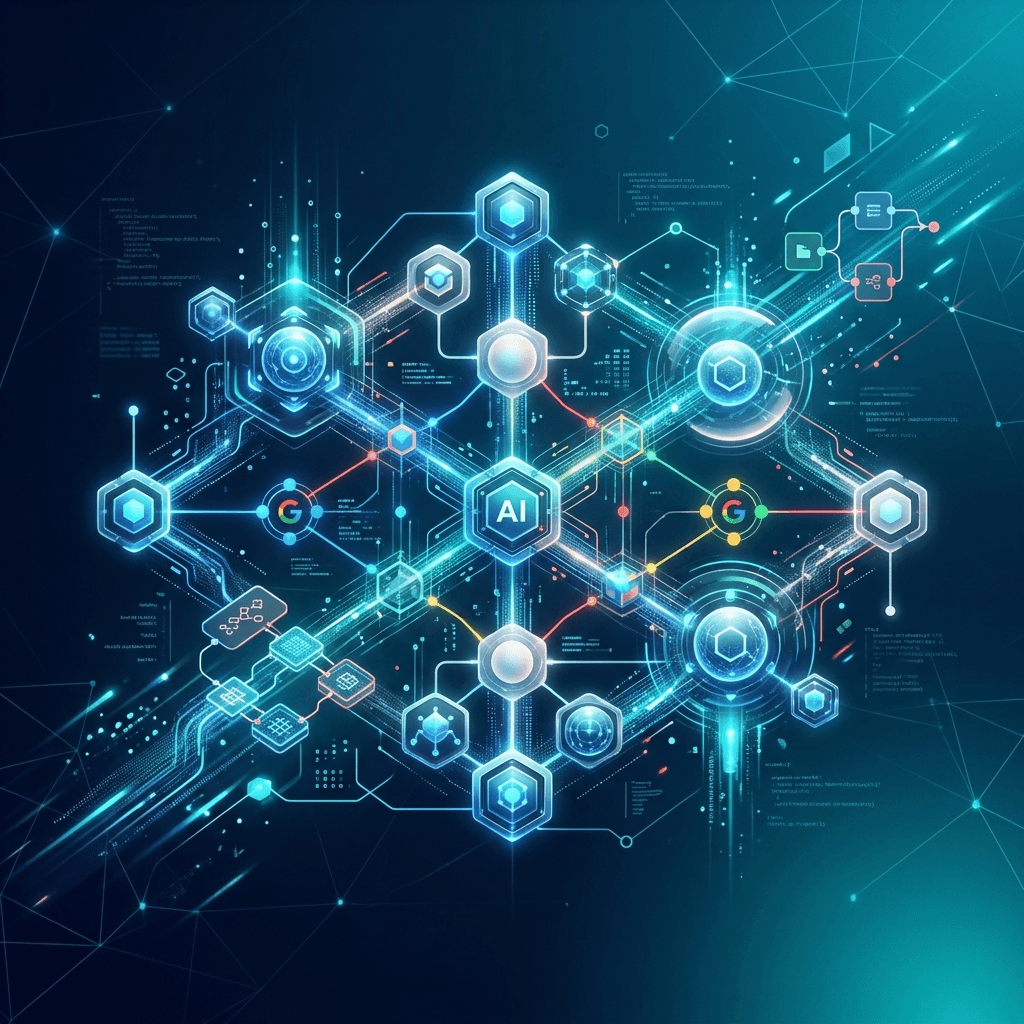
Google Antigravity Agents: The Complete Blueprint to Multi-Agent Orchestration and Enterprise Automation

Table of Contents
1. The Multi-Agent Advantage: Why Single-Thread AI is Dead #
The fundamental limitation of single-agent AI is sequential processing. Ask Claude to research competitors, write a report, draft emails, and update your CRM—it does them one at a time.
Antigravity's Parallel Architecture #
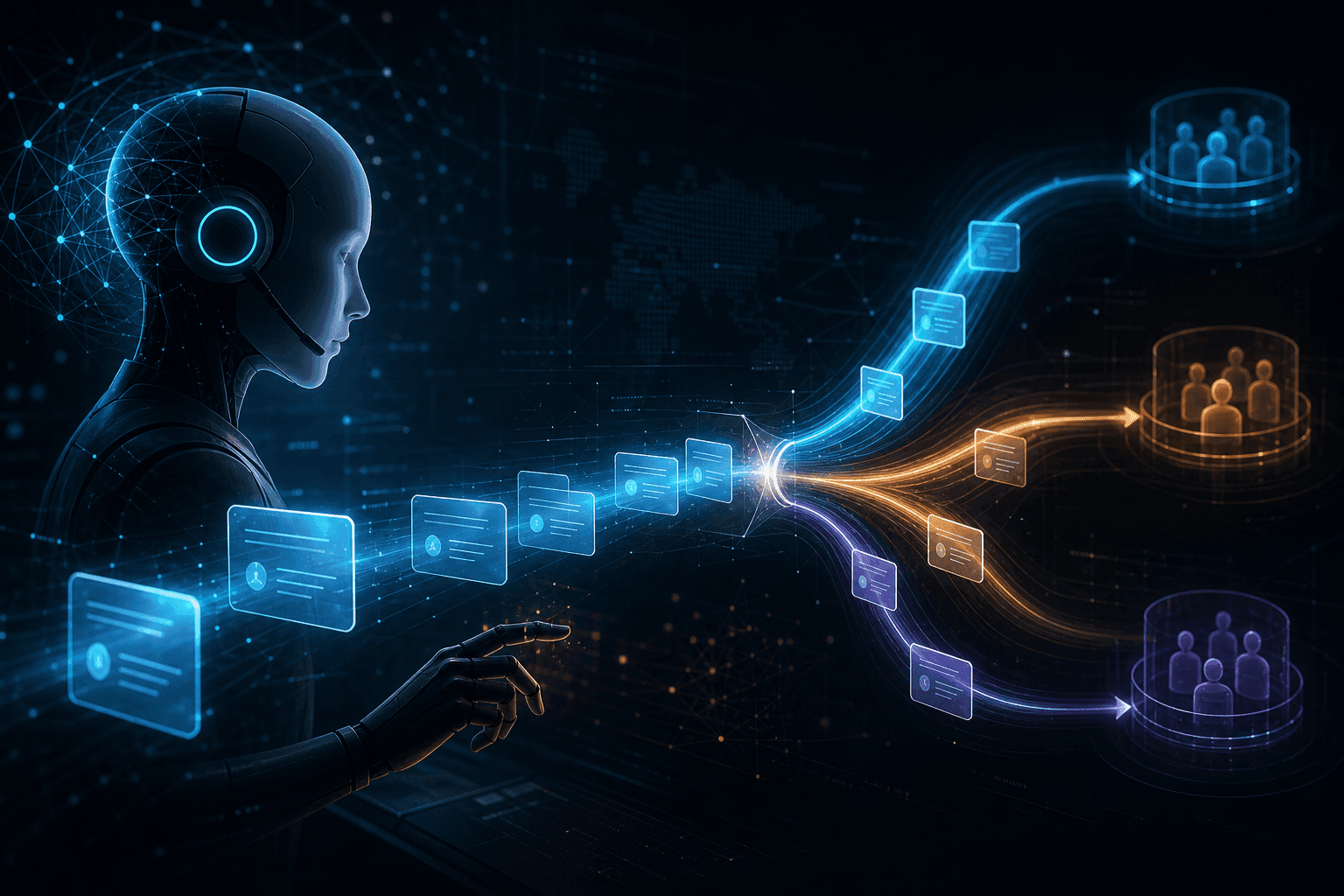
With Antigravity, you deploy a team of specialized agents that work simultaneously:
- Research Agent analyzes competitor data
- Writing Agent drafts the report
- Email Agent crafts outreach
- CRM Agent updates records
All four execute in parallel. What took 2 hours in single-thread mode takes 15 minutes with multi-agent orchestration.
The Manager View Paradigm #
You are no longer a prompt engineer. You are a CTO commanding a digital workforce. Manager View gives you a dashboard where you assign objectives, monitor agent progress, review inter-agent communications, and override decisions when needed.
2. Agent Team Configuration: The .md Framework #
Antigravity agents are configured through a deliberately simple, highly extensible system of markdown files.
The agents.md Team Roster #
Define your agent team with explicit personas, access boundaries, and skills:
## Lead Gen Agent
- Persona: Aggressive outbound sales researcher
- Skills: web-scraping.md, email-drafting.md, crm-update.md
- Access: Read/write to /data/leads/, /data/enriched/
- Restricted from: /data/clients/ (active client data)
- Turbo: Enabled for data enrichment

## Content Agent
- Persona: SEO-focused content strategist
- Skills: keyword-research.md, content-writing.md, publishing.md
- Access: Read/write to /content/, /public/
- Restricted from: /src/ (application code)
- Turbo: Enabled for formatting and publishing
Inter-Agent Communication #
Agents communicate through structured message passing. When the Research Agent discovers a high-value lead, it passes the data directly to the Email Agent without routing through a human. The Manager View logs all inter-agent communications for oversight.
3. The n8n Integration: Building the Autonomous Operations Layer #
Antigravity builds the intelligence. n8n provides the execution fabric. Together, they create autonomous business operations.
Architecture Overview #
Antigravity Agent Team
    ↓ (MCP Protocol)
n8n Automation Engine
    ↓
Business Systems (CRM, Email, Ads, Analytics)
How MCP Bridges the Gap #
Through the Model Context Protocol, Antigravity agents communicate directly with your n8n instance. Each n8n workflow appears as a callable tool that agents can invoke via natural language.
Example: The Lead Gen Agent says, "Enrich this lead and add to the CRM." Behind the scenes:
- Agent calls the
enrich_leadMCP tool → n8n runs the Clearbit + LinkedIn enrichment workflow - Agent receives enriched data
- Agent calls the
create_crm_dealMCP tool → n8n creates the HubSpot deal - Agent calls the
draft_outreachMCP tool → n8n generates personalized email via Claude API
The agent orchestrates a complex multi-step business process through simple tool calls.
Self-Healing n8n Workflows #
The killer feature: Antigravity agents can detect, diagnose, and fix n8n workflow failures autonomously.
Scenario: Your n8n lead enrichment workflow fails because Clearbit updated their API response format.
- n8n's Error Trigger fires, routing the error payload to an Antigravity monitoring agent
- The monitoring agent reads the error: "Unexpected JSON structure in Clearbit response"
- The agent queries Clearbit's documentation (via web search skill)
- The agent identifies the changed field names
- The agent modifies the n8n workflow's JSON parsing logic via the n8n API
- The agent re-runs the failed execution to verify the fix
- The agent logs the incident to your Slack #ops-alerts channel
Your pipeline self-healed at 3 AM while you slept. Zero downtime. Zero lost leads.
4. Workflow 1: The Autonomous SEO Content Pipeline #
One of the highest-value deployments for Antigravity + n8n.
The Agent Team #
| Agent | Role | Model |
|---|---|---|
| Research Agent | Keyword research, competitor content analysis | Gemini 3 Pro |
| Outline Agent | Content structure and SEO optimization | Gemini 3 Pro |
| Writing Agent | Long-form content creation | Gemini 3 Pro |
| QA Agent | Quality, accuracy, and plagiarism checking | Gemini 3 Flash |
| Publishing Agent | CMS formatting and deployment | Gemini 3 Flash |
The Workflow #
- Research Agent scrapes competitor domains, pulls keyword gap data from SEMrush API (via n8n)
- Outline Agent generates a comprehensive content outline following your brand's editorial guidelines
- Writing Agent produces the full draft, consuming the outline and checking brand voice via skills.md
- QA Agent verifies accuracy, checks for plagiarism, validates SEO elements
- Publishing Agent triggers an n8n webhook that formats the Markdown, adds canonical tags, generates the cover image, and deploys to your CMS
Output: 3–5 publication-ready, SEO-optimized articles per day. The equivalent of a 5-person content team for a fraction of the cost.
5. Workflow 2: High-Ticket B2B Lead Generation System #
The most profitable deployment pattern for agencies and B2B service companies.
The Pipeline Architecture #
- Monitor Agent watches LinkedIn, industry forums, and job boards for ICP-matching signals (via n8n scraping workflows)
- Enrich Agent calls the n8n enrichment pipeline: Clearbit company data → LinkedIn role verification → Internal CRM history check
- Score Agent applies your custom ICP scoring algorithm:
- Revenue $1M+ = +30 points
- Tech industry = +25 points
- Decision maker title = +20 points
- Previous website visit = +15 points
- Outreach Agent drafts hyper-personalized emails using enriched data, referencing specific company details
- Campaign Agent provisions sending campaigns via Instantly or Smartlead (through n8n)
- Follow-Up Agent monitors responses, handles objections, books meetings
Performance Metrics #
- Response time: Under 60 seconds from lead signal to personalized outreach
- Cost per qualified lead: $0.08–$0.25 (vs. $25–$75 with human SDRs)
- Operating hours: 24/7/365 with zero downtime
- Personalization depth: Every email references the prospect's specific company, role, and industry challenges
6. Workflow 3: Self-Fixing E-Commerce Operations #
For high-volume e-commerce businesses, operational reliability is revenue.
The Self-Healing Architecture #
Standard n8n flows handle:
- Cart abandonment SMS/email sequences
- Inventory sync across channels
- Order fulfillment notifications
- Dynamic pricing updates
When failure occurs:
- Twilio SMS API goes down → Error trigger fires
- Antigravity monitoring agent detects the SMS delivery failure spike
- Agent evaluates alternatives: AWS SNS, Vonage, email fallback
- Agent modifies the n8n workflow to route SMS through AWS SNS
- Agent verifies the fix with a test message
- Agent logs the change: "Switched SMS from Twilio to AWS SNS due to Twilio outage. Will revert when Twilio recovers."
- Agent monitors Twilio status page and automatically reverts when the outage ends
Impact: Zero lost revenue from infrastructure failures. Zero 3 AM phone calls. Zero manual intervention.
7. Artifacts: The Autonomous QA System #
Artifacts is Antigravity's built-in visual verification system that eliminates the "it works in theory" problem.
How Artifacts Work #
After an agent writes code or makes a configuration change, the QA agent spins up an isolated browser instance to visually verify the result:
- Navigate to the deployed page or application
- Take screenshots of key UI elements
- Click through critical user flows
- Compare visual output against expected results
- If discrepancies are found, automatically create a fix task for the dev agent
Why This Matters for Automation #
When your Antigravity agent modifies an n8n workflow's email template, the QA agent renders the email in a browser artifact, verifies the layout, checks link functionality, and confirms personalization tokens resolve correctly—all before the change goes live.
8. Security and Access Control for Multi-Agent Deployments #
Multi-agent systems require rigorous security architecture to prevent cascading failures.
Per-Agent Access Control #
Each agent should have the minimum permissions needed for its role:
| Agent | File System | Network | API Scopes |
|---|---|---|---|
| Research | Read: /data/ | Internet: Yes | Read-only APIs |
| Content | Read/Write: /content/ | Internet: No | CMS write |
| Lead Gen | Read/Write: /data/leads/ | Internet: Yes | CRM read/write |
| Monitor | Read: /logs/ | Internet: Limited | n8n API, Slack |
Inter-Agent Trust Boundaries #
Agents should not blindly trust data from other agents. Implement validation checks at each handoff point:
- Data type validation on all inter-agent messages
- Schema enforcement on tool call parameters
- Anomaly detection on agent behavior patterns
Turbo Mode Safety #
Configure turbo mode granularly:
- Safe for turbo: Data enrichment, content formatting, report generation
- Never turbo: Financial transactions, data deletion, production deployments, external communications
9. ROI Analysis and Cost Optimization #
Understanding the economics of multi-agent deployment ensures profitable scaling.
Cost Structure #
| Component | Monthly Cost |
|---|---|
| Gemini 3 API (agents) | $200–$800 |
| n8n hosting (self-hosted) | $15–$50 |
| External APIs (Clearbit, etc.) | $100–$500 |
| Infrastructure monitoring | $20–$50 |
| Total | $335–$1,400 |
What It Replaces #
| Human Role | Annual Cost | Monthly Equivalent |
|---|---|---|
| SDR (Sales Dev Rep) | $55,000 | $4,583 |
| Content Writer | $50,000 | $4,167 |
| Operations Manager | $70,000 | $5,833 |
| Junior Developer | $65,000 | $5,417 |
| Total | $240,000 | $20,000 |
The Math #
Replace 4 roles ($20,000/month) with multi-agent automation ($1,400/month maximum). That is a 93% cost reduction while achieving 24/7 operation and eliminating human bottlenecks.
The Caveat #
This does not mean firing your team. It means reallocating human talent to high-value strategic work—business development, client relationships, creative direction—while agents handle the operational execution. The businesses that win are those that multiply human capability, not replace it.
10. Building Your First Antigravity + n8n Deployment #
Here is the step-by-step action plan to get started.
Phase 1: Foundation (Week 1) #
- Set up a self-hosted n8n instance on a VPS (Hetzner, DigitalOcean)
- Install Google Antigravity on your development machine
- Create the
.agent/directory structure withagents.mdand initial skills - Configure MCP connection between Antigravity and n8n
Phase 2: First Agent (Week 2) #
- Build a single-agent workflow: a Lead Enrichment Agent that calls one n8n workflow
- Test the MCP connection end-to-end
- Verify data flows correctly from agent → n8n → external API → n8n → agent
- Add error handling and logging
Phase 3: Multi-Agent Expansion (Weeks 3–4) #
- Add a second agent (e.g., Email Drafting Agent) that receives data from the first
- Configure inter-agent communication and data handoff
- Implement the self-healing pattern: Error Trigger → monitoring agent → auto-fix
- Set up Slack notifications for agent actions
Phase 4: Production Hardening (Weeks 5–6) #
- Implement full security controls (RBAC, turbo mode config, audit logging)
- Add comprehensive monitoring and anomaly detection
- Run the system in shadow mode (logs actions but requires human approval)
- Gradually remove HITL gates as confidence builds
Phase 5: Scale (Ongoing) #
- Add more agent roles as new operational needs emerge
- Build out the n8n workflow library
- Optimize costs by monitoring agent token usage
- Document institutional knowledge in skills.md files
FAQ Section #
Q: What are Google Antigravity Agents? #
A: Antigravity Agents are specialized AI agents powered by Gemini 3 models that work as a coordinated team—planning, coding, testing, and deploying in parallel. Unlike single-thread AI assistants, Antigravity deploys multiple agents simultaneously across different tasks.
Q: How do Antigravity Agents integrate with n8n? #
A: Through the Model Context Protocol (MCP). Antigravity agents call n8n workflows as tools—the agent decides what action to take, and n8n executes it. This bridges AI reasoning with the execution fabric of your automation infrastructure.
Q: Can Antigravity agents fix broken n8n workflows? #
A: Yes. This is the self-healing pattern. When an n8n workflow fails, the error triggers a monitoring agent that diagnoses the issue, reads updated documentation, modifies the workflow logic via the n8n API, and re-runs the execution—all autonomously.
Q: How many agents can I run simultaneously? #
A: Practically, 5–10 specialized agents per workspace is optimal. More agents increase coordination complexity and compute costs. Start with 2–3 agents and scale based on operational needs.
Q: What is the cost of running Antigravity + n8n? #
A: Approximately $335–$1,400/month for a fully operational multi-agent system, depending on API usage volume and external service costs. This replaces $15,000–$20,000/month in human operational costs.
Q: Is it secure to give AI agents access to my business systems? #
A: With proper architecture: per-agent RBAC, scoped API tokens, turbo mode restrictions, audit logging, and HITL checkpoints for critical actions. Never give agents unrestricted access. Build defense in depth.
Q: What is the difference between Antigravity and Antigravity Agents? #
A: "Antigravity" is the overall platform (IDE, Manager View, Editor View, Artifacts). "Antigravity Agents" refers specifically to the multi-agent orchestration capability—deploying teams of specialized AI agents that work in parallel.
Q: Do I need to be a developer to use Antigravity Agents? #
A: Basic technical understanding is required (API concepts, JSON, automation logic). However, the Manager View abstracts most complexity—you define objectives in natural language and the agents handle implementation. Deep coding knowledge is optional.
Q: Can Antigravity Agents work with non-Google AI models? #
A: Antigravity is optimized for Gemini 3, but via MCP and custom tool integrations, agents can call OpenAI, Anthropic, or local models for specific tasks. The platform is model-aware but not model-locked.
Q: How long does it take to deploy a production Antigravity + n8n system? #
A: Plan 4–6 weeks for a fully hardened production deployment: 1 week for foundation, 1 week for first agent, 2 weeks for multi-agent expansion, and 2 weeks for production hardening. Faster for experienced teams.
Conclusion #
The era of single-AI interactions is ending. Multi-agent orchestration—where specialized agents collaborate, execute, and self-heal in parallel—is the new operational paradigm.
Google Antigravity provides the agent intelligence. n8n provides the execution infrastructure. Together, they create autonomous business operations that run 24/7 with human oversight rather than human labor.
The businesses building this infrastructure today are creating insurmountable competitive advantages. While competitors manually process leads, craft emails one at a time, and debug workflows at 3 AM, your agents are doing it all—simultaneously, continuously, and autonomously.
At williamspurlock.com, we architect and deploy Antigravity + n8n systems for ambitious businesses ready to scale without scaling headcount. Book a consultation today and let's build your autonomous operation.
Related Posts
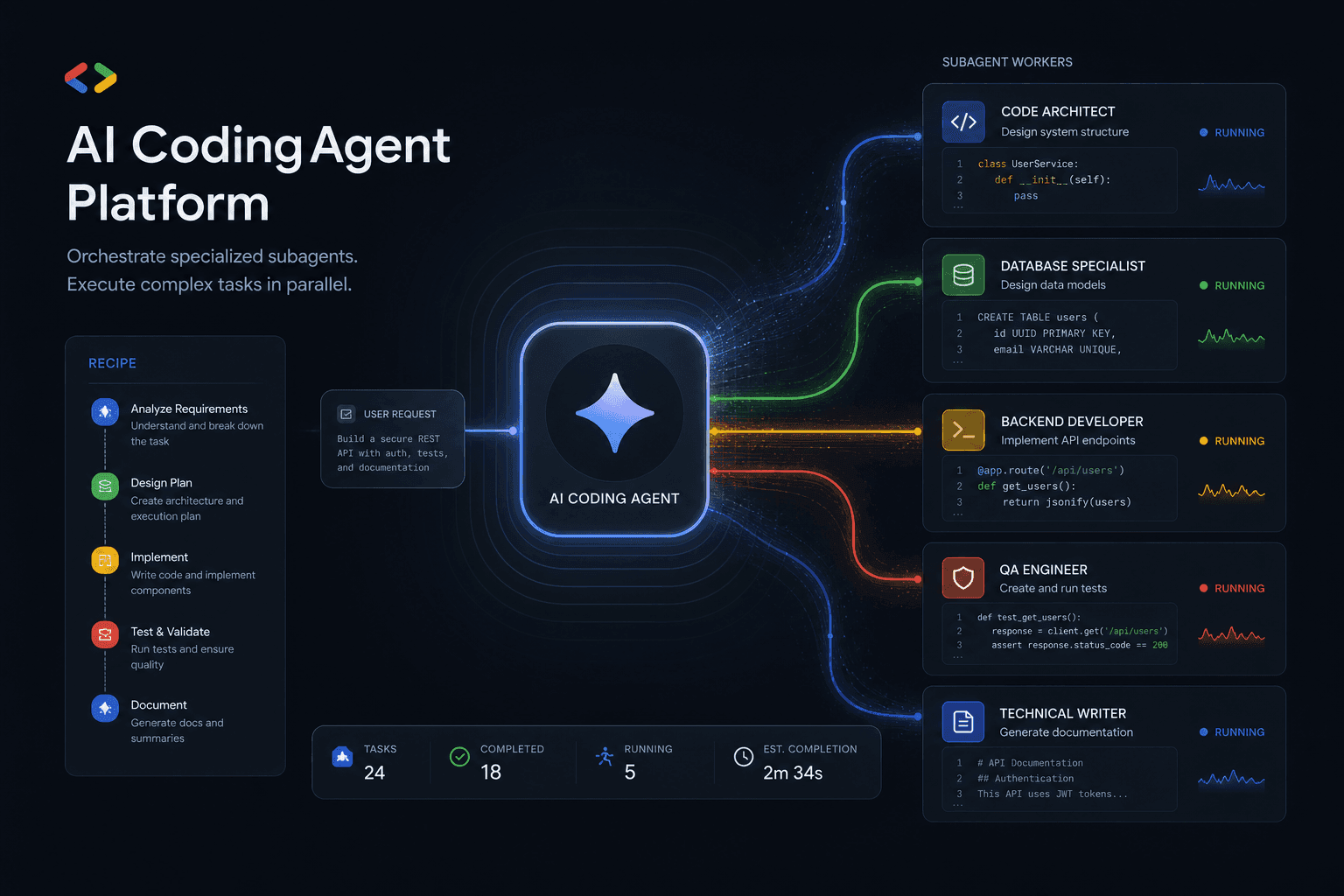
Antigravity 2.0 Subagent Recipes: How I Prompted Multi-Agent Workflows Day One
Five complete subagent recipes for Google Antigravity 2.0 that save 90+ minutes on Day One. From Friday audits to client onboarding, research briefs to migration assistants.
Claude Code Masterclass: Architecting Agentic Workflows, 1M Token Context, and The Death of Manual PR Reviews
Master Claude Code in this definitive 2026 guide. Discover how to use Opus 4.6, multi-agent teams, 1M token context, and automated PR reviews to radically scale your development workflows.
Google Antigravity Skills: Mastering AI-Assisted IDEs and Agentic Orchestration
Master Google Antigravity Skills — the modular markdown-based system that turns AI agents into domain-specific experts. Learn to build, configure, and deploy custom skills for autonomous development.