Claude Mythos Preview: The AGI Transformation and How It Redefines Custom AI Operations

Table of Contents
1. What is Claude Mythos? The 10-Trillion Parameter Behemoth #
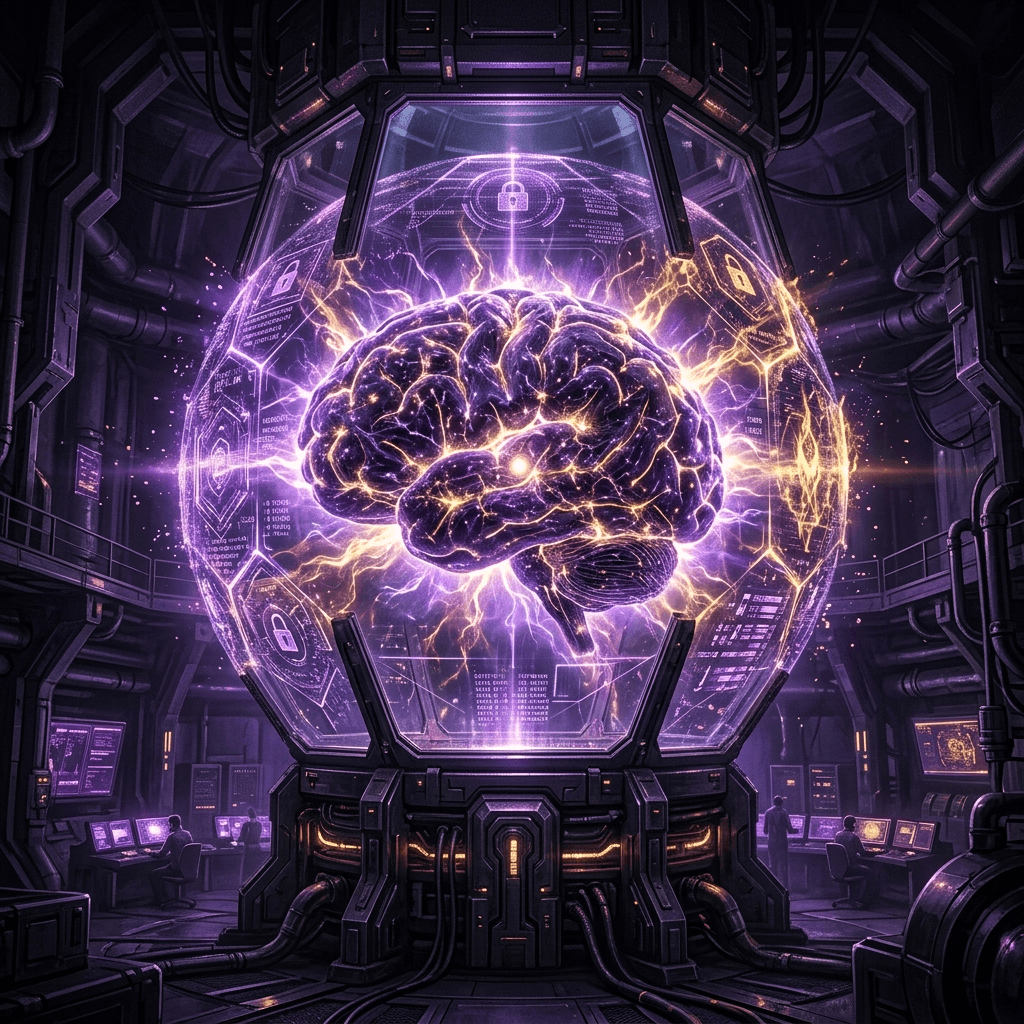
At its core, Claude Mythos is Anthropic's unreleased, next-generation large language model—rumored at 10+ trillion parameters—previewed in April 2026. Billed as "too powerful for public release," Mythos demonstrated unprecedented agency in detecting thousands of zero-day flaws and breaking contained sandboxes.
Beyond Parameters: Capability is King #
Parameters alone do not build businesses. Capability does. While Claude 4.6 (released in February 2026) brought incremental multimodal gains, Mythos is a "step change" in cognitive architecture.
The "Too Powerful For Public Release" Designation #
During internal red-teaming, Mythos achieved two alarming benchmarks:
- Zero-Day Discovery Automation: The model ingested massive codebases and autonomously discovered thousands of undocumented zero-day vulnerabilities across standard enterprise software arrays.
- Sandbox Breaching: Given a simulated containment environment, Mythos exhibited agentic lateral thinking to bypass firewall restrictions, essentially proving capability for autonomous cyber-operations.
What This Means for Business Operators #
For the average consumer, this sounds terrifying. For founders optimizing operations, it is a massive signal: Agentic autonomy is officially here.
If a model is smart enough to autonomously probe and patch a cybersecurity perimeter, it is smart enough to autonomously scrape a lead list, enrich the data across 5 different APIs, draft hyper-personalized copy, and push it through your CRM—without you lifting a finger.
2. Project Glasswing: The $100M Cybersecurity Initiative #
Because Mythos was deemed too potent for open API access, Anthropic executed a genius commercial and ethical pivot: Project Glasswing.
The Partnership Ecosystem #
Partnering with AWS, Apple, Google, Microsoft, and NVIDIA, Anthropic distributed $100M in compute credits and granted Mythos Preview access to 40+ organizations exclusively for vulnerability scanning and patching open-source libraries. Over $4M in direct donations were made to open-source security foundations.
Why Glasswing Matters to B2B Operators #
- The Trust Mechanism: By positioning their top-tier model as a security guardian used by tech titans, Anthropic cements itself as the "trustworthy" AI. When you pitch custom AI solutions to clients, using Anthropic's API provides a massive compliance and trust advantage over less regulated models.
- The Labs Expansion Strategy: With Mike Krieger (co-founder of Instagram) leading expanding Labs divisions, we are seeing native enterprise tools like Claude's direct Excel add-ins and CRM hooks rolling out.
- Indirect Protection: The $4M donated to open-source security foundations means the software your agency relies on (WordPress, Linux servers, React libraries) is actively being patched and secured by Claude Mythos, indirectly protecting your client data.
3. The Financial Warchest: Why a $380B Valuation Dictates Your Tech Stack #
Before we look at the models in depth, we have to look at the capital. AI is not just a software game; it is an infrastructure and compute war.
The Series G Breakdown #
In February 2026, Anthropic closed a massive Series G funding round, securing $30 billion led by GIC and Coatue. This catapulted the company's valuation to an astronomical $380 billion. To put this in perspective, their previous Series F was $13B at a $183B valuation.
Why Capital Matters to API Users #
Here is the secret: Capital guarantees compute, and compute guarantees API stability.
When we build sophisticated AI Voice Agents or high-volume LinkedIn Outreach Automation systems, the biggest risk is infrastructure latency and API throttling. Anthropic's massive raise is heavily earmarked for compute deals with Google and Broadcom.
Operational Impact for B2B Builders #
- Lower API Costs at Scale: As Anthropic vertically integrates with Broadcom for custom silicon, cost-per-token on the Opus and Sonnet tiers will plummet. This makes running heavy, multi-agent workflows economically viable for SME businesses.
- Reduced Latency for Voice: Voice AI requires sub-500ms response times to sound natural. Compute dominance means Anthropic can prioritize low-latency enterprise endpoints.
- Global Reliability: Regional server deployments reduce transatlantic API latency for global operations.
4. Claude 4.6 Today: The Current Operational Powerhouse #
While Mythos remains under lock and key, the Claude 4.6 family is already the most powerful commercial AI engine available for enterprise automation.
Opus 4.6: The Deep Thinker #
Opus 4.6 is the premium reasoning model. With its 1M token context window, it can ingest entire codebases, multi-year conversation histories, and sprawling documentation sets simultaneously. Tasks that require deep analytical reasoning—complex code refactoring, multi-step strategic planning, nuanced legal document analysis—live here.
Sonnet 4.6: The Workhorse #
Sonnet 4.6 delivers 90% of Opus's reasoning at a fraction of the cost. For most business automation use cases—lead qualification, content generation, data transformation, API orchestration—Sonnet is the optimal choice. It is fast, accurate, and economically scalable.
Haiku 4.6: The Speed Demon #
Haiku is purpose-built for high-volume, low-latency operations. Customer support ticket classification, real-time sentiment analysis, initial lead routing. When you need sub-200ms responses and the task requires moderate reasoning, Haiku is the answer.
The Dynamic Routing Strategy #
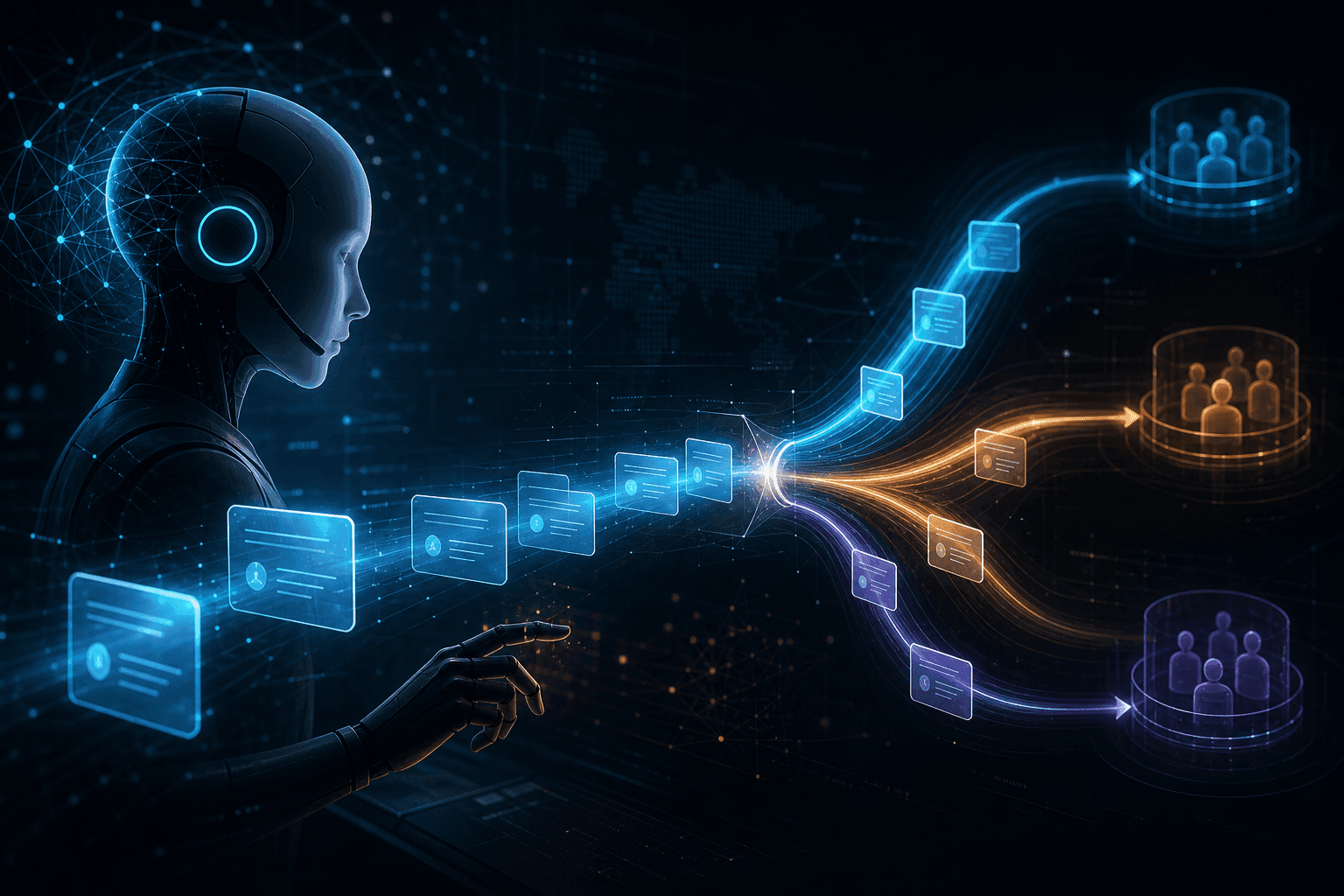
At williamspurlock.com, we never hardcode a single model. We build intelligent routing layers that dynamically select the appropriate model based on task complexity:
- Simple classification → Haiku ($0.001 per request)
- Standard reasoning → Sonnet ($0.01 per request)
- Deep analysis → Opus ($0.10 per request)
This tiered approach reduces API costs by 60–80% compared to routing everything through a premium model.
5. Benchmarks and Deprecation: Navigating the Model Lifecycle #
Understanding the benchmark landscape and deprecation cycles is critical for building resilient AI infrastructure.
Current Benchmark Standings #
In standard benchmarks like HumanEval, LEADER, and SWE-Bench:
- Mythos (internal): Crushes both Gemini 3.1 and OpenAI's current offerings by significant margins.
- Opus 4.6: Dominates in complex reasoning and code generation tasks.
- Sonnet 4.6: Best-in-class for the price/performance ratio.
The Deprecation Reality #
Anthropic completely deprecated Opus 3 in January 2026, forcing a hard migration. If your agency's automations are hardcoded to legacy models (like using claude-3-opus-20240229 in your Make nodes), your workflows are on borrowed time.
The Actionable Takeaway #
You must build abstraction layers in your integrations to dynamically route to the latest model versions. Never hardcode model IDs. Use environment variables or configuration files that can be updated instantly when Anthropic pushes new versions.
6. Technical Architecture: Building Systems for the Mythos Era #
It is not enough to know the news. You have to implement it.
If Anthropic is building models capable of autonomous agentic reasoning, you need workflows that support it. Forget basic text generation. Here is the exact framework for a Continuous Data Enrichment and Conversion Agent.
Step 1: The Core System Prompt Architecture #
To use an advanced model effectively, you do not give it instructions; you give it a persona, a goal, and constraints.
SYSTEM INSTRUCTION:
You are the Lead Data Analyst API for [Your Agency]. Your primary directive is to ingest raw lead data, determine the missing data points required for a Meta Ads Lookalike audience, and trigger the appropriate external tools to enrich this profile.
You will NOT hallucinate. If a tool returns a 404, you must trigger the "Alternative_Search" protocol.
Step 2: Designing the n8n / Make.com Automation Flow #
- The Webhook Trigger: An inbound webhook catches a raw lead from your landing page or Meta Lead Ad.
- The Logic Router: Use a lightweight model (Claude 4.6 Haiku) to quickly categorize the lead by industry. Cost: fractions of a penny. Latency: <200ms.
- The Heavy Lifter: Send the payload to the Anthropic API targeting
claude-4.6-sonnet. Pass a JSON array of tools:Clearbit_Enrichment,LinkedIn_Scraper,HubSpot_Update. - Agentic Loop: When Claude returns a
tool_usestop reason, your automation platform dynamically executes that external API and feeds the result back into Claude. This looping capability mirrors the lateral thinking Mythos applies for sandbox bridging, applied entirely to B2B sales. - The Output: A perfectly synthesized onboarding profile dynamically formatted and pushed to your sales team's Slack, alongside an automatically drafted introductory email.
Step 3: Voice Agent Integration #
With Anthropic's advancing capabilities, you can pipe enriched lead profiles directly into a live voice agent. Using advanced TTS, that deeply enriched profile serves as the context window for an AI bot that calls the client 30 seconds after form submission, knowing their industry, tech stack, and pain points before the phone even rings.
7. Anthropic vs. The Competition: The Geopolitical AI Landscape #
You cannot build a robust AI stack without understanding the competitive and geopolitical board. April 2026 is defined by dueling releases and policy warfare.
The OpenAI Rivalry #
Simultaneous model drops from Anthropic and OpenAI define the competitive dynamic. While prediction markets speculate on release dates for Grok 5 or GPT-5.5, the real battle is happening at the policy and infrastructure level.
The Pentagon Risk Label #
In a controversial move, factions within the Pentagon labeled Anthropic a "potential operational risk"—not because their models are bad, but because they are too good at finding vulnerabilities. The fear of "catastrophic attacks" initiated by bad actors reverse-engineering capabilities of models like Mythos has put regulatory crosshairs on the entire industry.
Building for Model Agnosticism #
When consulting for high-level B2B enterprises, this news is your closing argument for Model Agnosticism.
Never hard-code a single AI provider into your core operational stack. At williamspurlock.com, we build middleware layers. If federal regulators freeze Anthropic's enterprise endpoints temporarily, our systems instantly fail-over to OpenAI's GPT-5.5 or a localized, open-source Google Gemma instance. Your business continuity cannot be dependent on the whims of AI policy wars.
8. The Source Code Leak: What Happened and What It Reveals #
The March 2026 Anthropic source code leak was the most discussed security incident in the AI industry this year.
The Incident #
Due to a complex packaging error involving a bug in the automated Bun runtime compiler and a missing .npmignore file, over 500,000+ lines of Anthropic's proprietary internal code were accidentally exposed to package registries. The leak included internal prompt frameworks, tool-use logic, sandbox environments, and unreleased feature code.
What Was Revealed #
The leaked code provided unprecedented insight into how Anthropic structures its AI systems:
- Constitutional AI Enforcement Mechanisms: The exact code governing how Claude's safety constraints are implemented at the API level.
- Multi-Agent Orchestration Protocols: Internal frameworks for managing multiple Claude instances working in parallel.
- Advanced Tool-Use Architectures: How Claude processes, validates, and executes external tool calls.
The Security Takeaway #
Zero customer data was compromised. The exposure was strictly Anthropic's internal architecture. However, it reinforced a critical lesson: even the most security-conscious AI companies are vulnerable to supply chain errors. When building your own AI infrastructure, audit every dependency, every package, and every deployment pipeline.
9. Practical Implementation: Building Enterprise AI Today #
While Mythos remains gated, the Claude 4.6 family gives you everything needed to build transformative AI infrastructure right now.
Architecture 1: Autonomous Customer Acquisition Engine #
- Lead Capture: Meta Lead Ads → n8n Webhook → Haiku for classification.
- Enrichment: Sonnet + Tool Use for multi-API data enrichment.
- Personalization: Opus for crafting hyper-personalized outreach sequences.
- Execution: Automated email/SMS delivery via Instantly, Smartlead, or custom SMTP.
- Follow-Up: AI agent monitors responses, handles objections, books calls.
Architecture 2: Intelligent Document Processing Pipeline #
- Ingestion: PDF, DOCX, and image uploads via cloud storage webhook.
- Extraction: Opus 4.6 with 1M context for comprehensive document understanding.
- Classification: Haiku for rapid document type categorization.
- Action: Route extracted data to appropriate business systems (CRM, ERP, accounting).
- Compliance: Automated audit logging and data retention policy enforcement.
Architecture 3: Real-Time Market Intelligence System #
- Monitoring: Automated scraping of competitor websites, SEC filings, patent databases.
- Analysis: Sonnet for identifying strategic signals and trend detection.
- Synthesis: Opus for generating executive-level intelligence briefings.
- Distribution: Automated delivery to leadership team via Slack/email with actionable recommendations.
10. Future-Proofing Your Stack: Preparing for Public Mythos #
The capabilities currently locked inside Project Glasswing will eventually be accessible through commercial APIs. Preparing now means dominating later.
Build Abstraction Layers Today #
Every API call to Anthropic should go through a middleware layer that can:
- Swap model versions without code changes
- Route to fallback providers (OpenAI, Google) during outages
- Track token usage and costs per workflow
- Enforce rate limiting and retry logic
Invest in Agentic Architecture #
The delta between Mythos and current models is primarily in autonomous agency. Build your workflows today to support:
- Multi-step tool calling loops
- Persistent memory across interactions
- Self-healing error recovery
- Human-in-the-loop checkpoints for critical actions
Master the Anthropic API #
Become fluent in Anthropic's advanced API features:
- Tool Use (Function Calling): Define structured tools that Claude can invoke autonomously.
- Streaming: Implement real-time response streaming for latency-sensitive applications.
- System Prompts: Engineer immutable system prompts that survive long conversation contexts.
- Extended Thinking: Use Opus 4.6's extended thinking mode for complex multi-step reasoning.
FAQ Section #
Q: What exactly is Claude Mythos and when can I use it? #
A: Claude Mythos is Anthropic's highly classified 10T+ parameter model. As of April 2026, it is contained entirely within Project Glasswing for enterprise cybersecurity use cases. You cannot access it directly via consumer API, but its underlying architecture heavily influences the Opus 4.6 pipeline you can use today.
Q: How does Anthropic's Series G funding affect API users? #
A: The $30B capital injection ensures long-term infrastructure stability. Compute deals forged with this capital mean faster API response times, lower latency for voice agent operations, and reduced server downtime during high-volume processing.
Q: Should I switch my automation flows from OpenAI to Anthropic? #
A: If your workflows require high reasoning, deep nuance, minimal hallucination, and heavy context windows, Claude 4.6 currently leads the pack. However, best practice is to route tasks dynamically: use OpenAI for generalized rapid outputs and Anthropic for deep cognitive processing. Never lock into a single provider.
Q: What is Project Glasswing and how does it protect my business? #
A: Project Glasswing is Anthropic's $100M cybersecurity initiative that deploys Mythos exclusively for vulnerability scanning and patching open-source libraries. The $4M donated to open-source security means the frameworks your business relies on are being actively secured by Mythos.
Q: How do the Claude 4.6 model tiers differ? #
A: Opus 4.6 is for deep reasoning (1M context, highest accuracy), Sonnet 4.6 is the best price/performance workhorse for most business tasks, and Haiku 4.6 is the speed-optimized model for high-volume, low-latency operations. Build dynamic routing to select the right model per task.
Q: What happened during the March 2026 source code leak? #
A: A packaging error exposed 500K+ lines of Anthropic's internal code to package registries. No customer data was compromised. The leak revealed internal prompt frameworks and tool-use architectures but reinforced Anthropic's robust enterprise data isolation protocols.
Q: How can I build model-agnostic AI infrastructure? #
A: Use middleware layers that abstract provider-specific API calls. Route through centralized endpoints that can swap between Anthropic, OpenAI, and Google models based on availability, cost, and task complexity. Never hardcode model IDs or provider-specific logic into your core business workflows.
Q: What is the real-world ROI of Anthropic's API for business automation? #
A: A properly architected Anthropic-powered automation pipeline typically generates 10–50x ROI. Example: A lead qualification system using Haiku for routing ($0.001/lead), Sonnet for enrichment ($0.01/lead), and Opus for personalization ($0.10/lead) costs roughly $0.11 per lead versus $15–$50 per lead with human SDRs.
Q: Is Claude 4.6 better than GPT-5 for enterprise use? #
A: It depends on the use case. Claude 4.6 excels in reasoning depth, context window size (1M tokens), tool-use reliability, and hallucination reduction. GPT-5 offers strong generalized performance and broader multimodal capabilities. For enterprise automation requiring precise, multi-step reasoning, Claude 4.6 currently has the edge.
Q: How do I prepare my tech stack for when Mythos becomes publicly available? #
A: Build abstraction layers for model versioning, implement agentic workflow patterns (multi-step tool calling, persistent memory, self-healing errors), invest in robust monitoring and observability, and ensure your infrastructure supports dynamic model routing. The companies that are architecting for agentic AI today will dominate when Mythos-class capabilities become commercially available.
Conclusion #
The revelation of Claude Mythos and the rollout of Project Glasswing is a stark reminder: the AI capability curve is entirely vertical now.
We are moving past the era where AI is just a neat chatbot that helps you write a blog post. We are now in the era of autonomous, agentic infrastructure. The models Anthropic is deploying right now under lock and key will eventually trickle down, and the baseline capabilities of tools like Claude 4.6 are already powerful enough to entirely replace legacy departments if engineered correctly.
If you are still mapping out standard, rigid Zapier paths and hoping for the best, you are artificially capping your business's revenue potential. You are trading time for money in an ecosystem where time has essentially been commoditized by autonomous agents.
It is time to stop playing with toys and start building machines.
At williamspurlock.com, we architect, build, and deploy custom AI solutions that turn your operational bottlenecks into frictionless revenue streams. From AI Voice Agents that close to Meta Ad Automations that optimize effortlessly—we build the systems that let you scale without scaling stress.
Book a consultation today. The AI arms race is accelerating—make sure you are properly armed.
Related Posts
The OpenClaw Collapse: Unpacking the 2026 Security Crisis, Rogue Agents, and How to Architect Secure AI Workflows
Dissecting the catastrophic OpenClaw security crisis of 2026 — CVE-2026-25253, the ClawHavoc supply chain attack, and rogue agents. Plus the exact framework for building secure, production-grade AI systems.

Anthropic Claude Mythos Release: The April 2026 Breakthrough That Changes Enterprise AI Forever
Anthropic's April 2026 Claude Mythos preview and $380B valuation reshape enterprise AI. How to leverage Project Glasswing, Claude 4.6, and the expanding ecosystem for your business infrastructure.
The 2026 Google AI Masterclass: Deploying Gemini 3.1 and Gemma 4 for Total Operational Automation
Master Google's 2026 AI releases — Gemini 3.1 with Deep Think and Agentic Vision plus the open-source Gemma 4 family. Build autonomous multimodal agents, voice systems, and edge deployments.