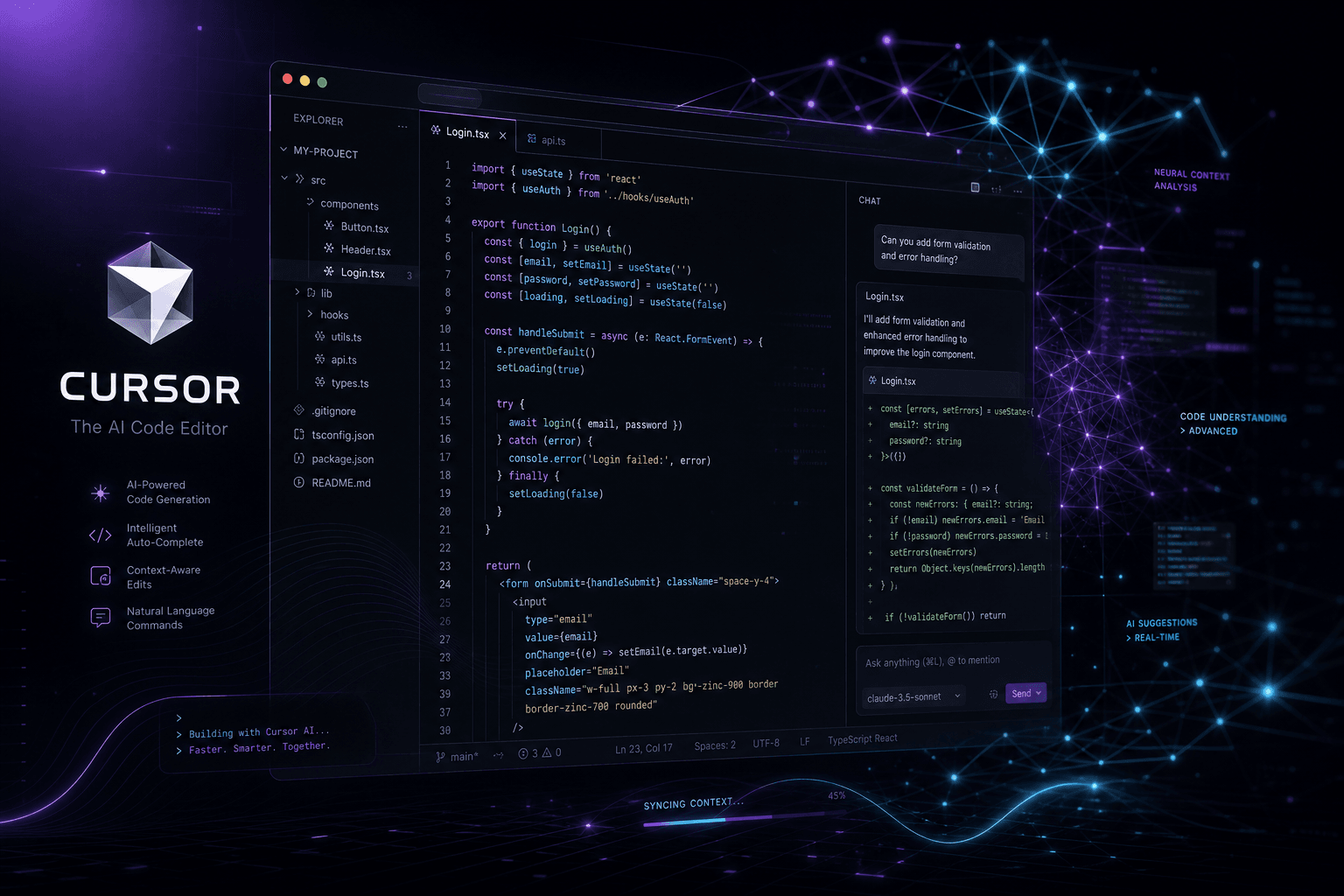
Cursor in 2024: The Indie Dev's Secret Weapon Before the $400M Valuation

Table of Contents
FAQ Section #
Q: When did Cursor become popular with developers? #
A: Cursor gained traction with indie developers and early adopters in early 2024, months before its $400 million Series A valuation in August 2024. The mainstream developer community didn't widely adopt it until late 2024.
Q: What made Cursor different from GitHub Copilot in 2024? #
A: Cursor was AI-native architecture with multi-file Composer refactors, full codebase context, and model choice (Claude 3 + GPT-4). Copilot was limited to single-file autocomplete and locked to OpenAI models.
Q: Why did indie developers prefer Cursor over VS Code in early 2024? #
A: Indie developers valued velocity and autonomy — they could switch tools without corporate approval and immediately benefit from Cursor's superior context understanding and multi-file editing capabilities.
Q: What is Cursor's Composer feature? #
A: Composer is Cursor's multi-file AI editing interface that lets developers describe changes in natural language and apply them across multiple files simultaneously — something Copilot couldn't do in early 2024.
Q: How much was Cursor valued at in 2024? #
A: Cursor's parent company Anysphere raised a $400 million valuation Series A in August 2024, just months after being relatively unknown to mainstream developers.
Q: Could Cursor replace VS Code entirely? #
A: Unlikely. VS Code's extension ecosystem and enterprise adoption are massive moats. Cursor carved out the AI-native high-end editor market rather than trying to replace VS Code completely.
Q: What models did Cursor support in April 2024? #
A: Cursor supported Claude 3 (Opus and Sonnet) and GPT-4, giving users choice. Copilot was restricted to OpenAI models only at that time.
Q: Why was Cursor "under the radar" for so long? #
A: Default bias, enterprise lock-in, and skepticism fatigue kept Cursor niche. Most developers don't switch editors without compelling reason, and big companies have procurement barriers.
Q: What does "AI-native" editor architecture mean? #
A: AI-native means AI is a core design principle from the ground up, not a plugin or add-on. The interface, context management, and editing flows are built around AI collaboration.
Q: Should developers still try Cursor in 2024? #
A: Yes. Even with mainstream attention, Cursor maintains a lead in AI-native editing workflows. For developers building with AI agents and complex refactors, it's still the most capable option.
The Bottom Line #
Cursor in April 2024 was a textbook example of alpha in the developer tools market — powerful technology that the mainstream hadn't discovered yet. The indie developers who adopted it early weren't just getting a better editor. They were getting a preview of how all coding would eventually work.
The $400M valuation wasn't a surprise to anyone who'd been using Cursor daily. It was validation of what was already obvious: AI-native editing is the future, and Cursor defined the category.
If you're building software today and still using the same tools everyone else uses, you're missing the leverage that early adopters capture. The next generation of AI-native development tools is shipping now. The question is whether you'll be ahead of the curve or chasing it.
Ready to integrate AI-native workflows into your development process? Book an AI automation strategy call and let's architect your team's AI coding stack — whether that's Cursor, Claude Code, or a custom multi-agent setup that gives you the same kind of edge early Cursor adopters found in 2024.
Related Posts

AI Sales Agents in 2026: What They Can Do, What They Can't, and When to Deploy One
AI sales agents can research, qualify, sequence outbound, and book calls — but not negotiate or invent trust. Here's what works in 2026 and when to deploy.

AI Chat vs Live Chat: When to Use Each and How to Set Up the Handoff
When to use AI chat vs live chat, how to train the bot on your products and policies, cut support cost without tanking CSAT, and wire a clean human handoff.

How to Build an AI Support Agent That Handles 80% of Tickets Automatically
Build an AI support agent that routes tickets, answers FAQs from your KB, and escalates the rest — the n8n + model stack I use to hit ~80% auto-handle rates.